Painted Portraits, Painted Faces: Reading an Ideal Off a Panel
Almost everything said about Renaissance complexions is read off portraits, and a portrait is the last thing that should be trusted about a face.
In short
Renaissance portraiture is idealisation rather than documentation, and the most famous claim derived from it — that Elizabeth I was ruined by lead cosmetics — is not supported by the contemporary accounts of her final illness and death.
- 12min read
- 6chapters
- 3sources
Vivien
Your guide through time
Listen to this essay
5 min listenVivien reads our essays aloud, word for word — every date and every name in its place — so you can listen the way you would be walked through a gallery.
An AI voice, designed for History of Makeup
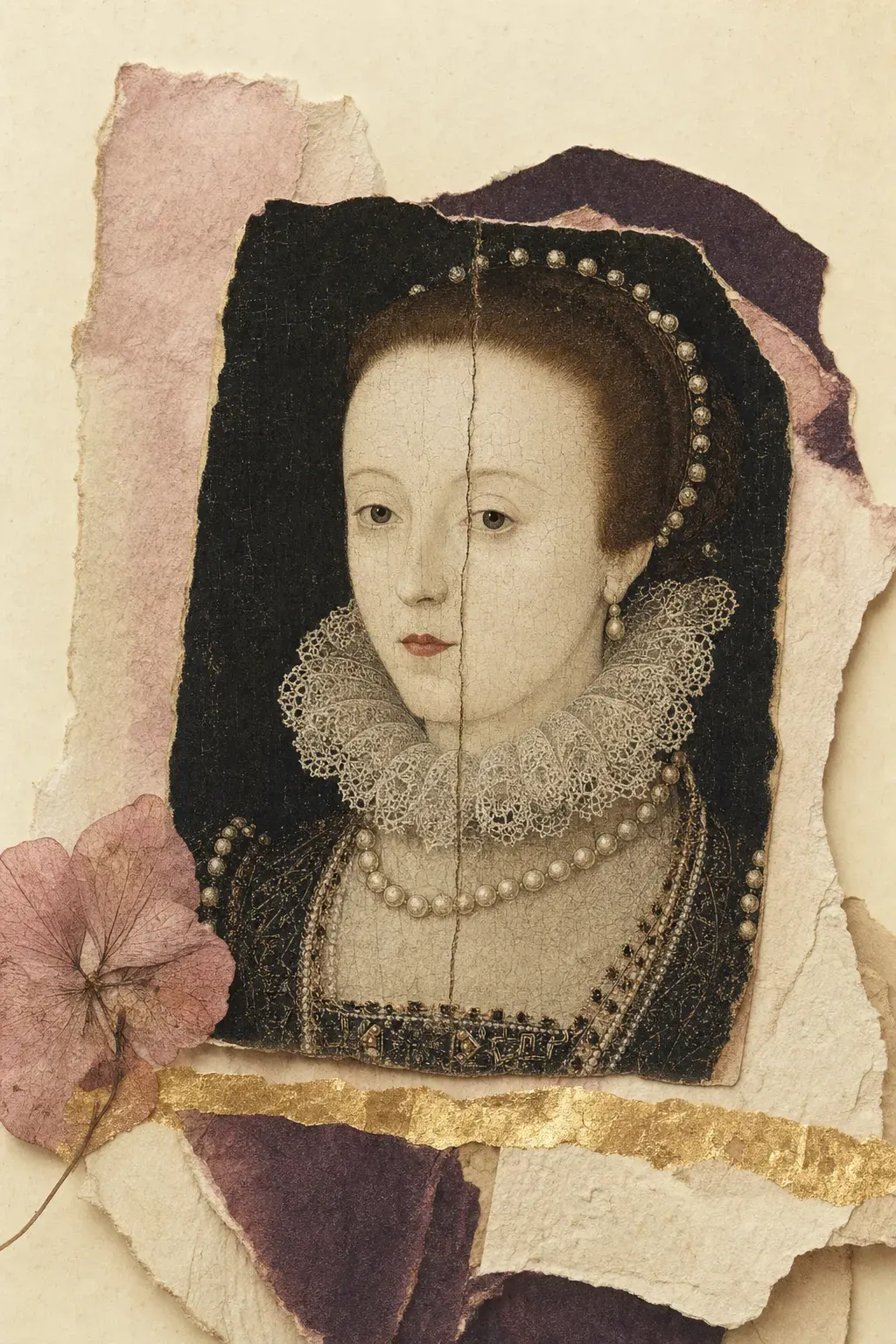
Ask where anyone knows what a Renaissance face looked like and the honest answer is: from paintings. There are no photographs, the cosmetic residue that survives is mineral rather than facial, and written descriptions of complexions are conventional to the point of uselessness.[1]
Which means the entire visual record of the period is a body of commissioned images, made by professionals, to satisfy patrons, according to conventions those professionals had been trained in. Portrait evidence of this kind is painted idealisation rather than documentation, and treating it as a photograph of a face is the single commonest error in writing about the period.[1]
What a Portrait Is For
A portrait in this period is an instrument. It secures a marriage negotiation, asserts a lineage, records an office, commemorates a death, or presents a ruler to subjects who will never see them. None of those purposes is served by accuracy about a complexion.[2]
The conventions follow from the purpose. An unbroken pale complexion, a high clear forehead, a small mouth and an even surface are not observations; they are the visual vocabulary for the qualities the image is there to assert. A painter who rendered a sitter’s actual skin would have been failing at the commission.[2]
The Circular Argument
There is a loop in the standard account that is worth making explicit. Portraits show pale unbroken complexions; ceruse produces a pale unbroken complexion; therefore the sitters wore ceruse; therefore the portraits are evidence of how much ceruse was worn.[3]
Each step is plausible and the conclusion is not established by any of them, because the convention would produce identical images whether or not the sitter wore anything at all. The material evidence for ceruse is good and comes from elsewhere — from recipes, from trade, from the descriptions of its manufacture. The portraits corroborate the ideal; they cannot measure the practice.[4]
The portraits corroborate the ideal; they cannot measure the practice.
The Queen Who Was Not Ruined
The most repeated claim in this whole period is that Elizabeth I destroyed her face and eventually herself with lead cosmetics. It appears in popular histories, documentaries and museum copy, and it does not survive contact with the sources.[5]
Cosmetics are not among the causes that the contemporary accounts of her final illness and death give. The image of a ruined, heavily painted queen is a later construction, assembled and embellished after the fact — which makes it evidence about how Elizabeth was remembered rather than about what she wore.[5]
Why That Story Is So Durable
It is durable because it is satisfying. It supplies a moral — vanity punished — attaches it to a famous woman, and closes the loop between an ideal and its cost in a single sentence. Very little in the actual record is that tidy.[6]
It is also durable because the underlying chemistry is true. Lead cosmetics did damage skin, and a reader who knows that will accept the specific claim on the strength of the general one. The general fact does not establish the particular death, and the distinction between them is exactly what a history is for.[7]
What Portraits Can Be Trusted For
They are excellent evidence for the ideal itself, and for its chronology. Changes in the admired hairline, brow and complexion can be tracked across a sequence of images with real confidence, because a shift in convention is exactly what a body of commissioned pictures records well.[8]
They are also good evidence for what was thought worth signalling, and for how quickly a court taste spread between regions. What they cannot do is tell you how many people met the standard, or what anyone looked like on a morning nobody was painting them.[8]
Used that way the evidence is genuinely strong. The error is not in reading portraits at all; it is in reading them for the wrong question.[8]
What Is Not Known
There is no way to establish, from a painted panel, whether a particular sitter wore cosmetics. Both a painted convention applied to a bare face and a genuinely painted face would appear identically, and no technique available to a viewer separates them.[9]
The surviving images are also a sample of the wealthy, since portraits were commissioned by people who could pay for them. Any statement about Renaissance complexions derived from portraiture is a statement about a very small and very unrepresentative group.[10]
Sources
- [1, 2, 3, 8, 9]Italian Renaissance portraiture, European Paintings collectionView source (opens in a new tab) Accessed 2026-09-22.
- [4, 7, 10]Fashions in Makeup: From Ancient to Modern Times Peter Owen, 1972.
- [5, 6]The Death of Elizabeth I: Remembering and Reconstructing the Virgin Queen Palgrave Macmillan, 2010.
Filed under