Concealer palette
Several cream concealers side by side in one flat case, for mixing an exact match or for correcting and concealing from a single kit. Who needs one, how to mix without muddying it — and where the habit of mixing shades came from.
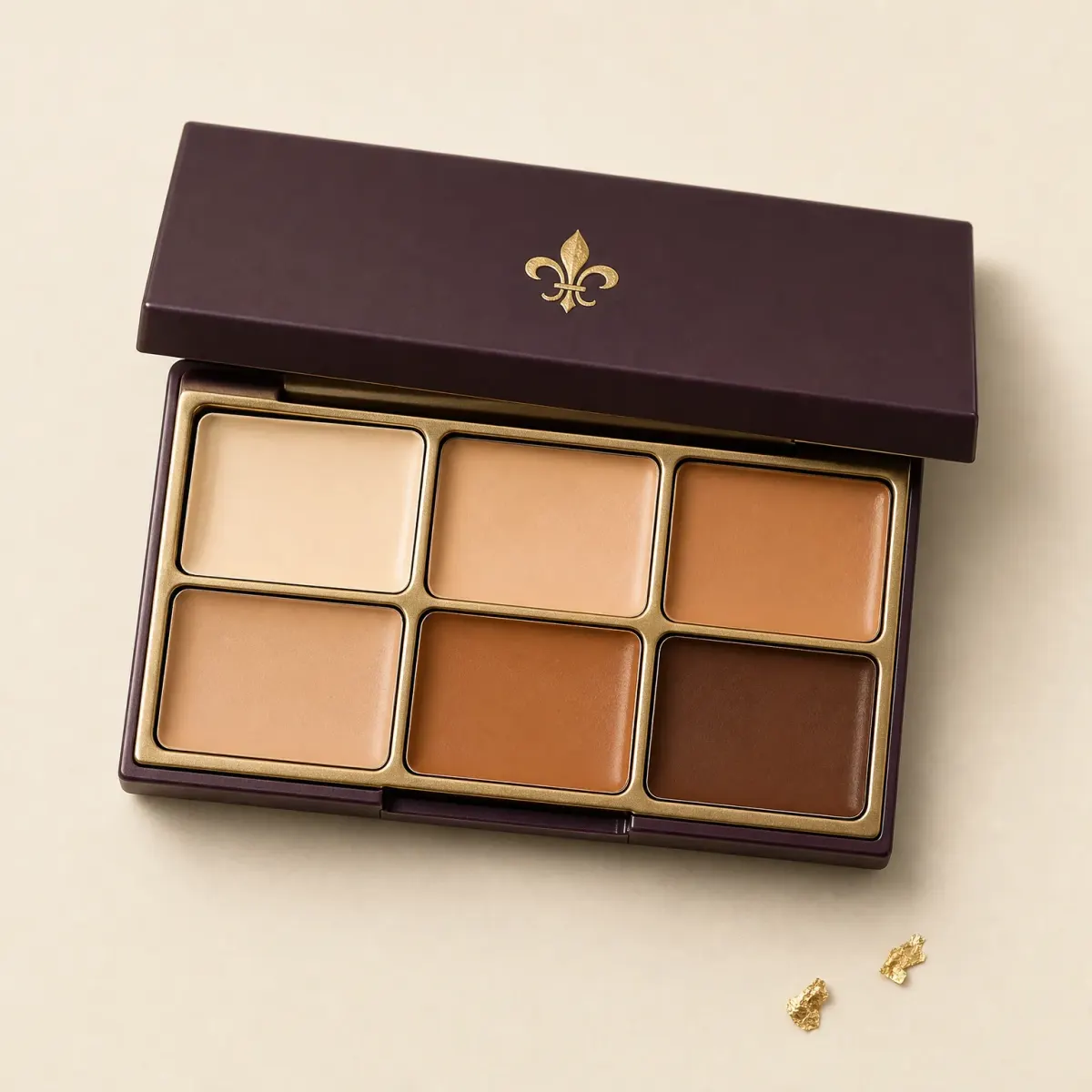
A concealer palette is a flat case of several cream concealers in graded shades, sometimes with a colour-correcting shade or two, used to mix an exact match on the back of the hand or to correct and conceal from one kit.
Our picks
Chosen to show the range: prestige mixing compacts, professional palettes and drugstore ones. It is a small category, and only palettes of concealers, not of correctors or contour shades alone, are included. Each opens where its maker sells it — on Amazon, or at the house’s own shop — and you choose the palette for your depth of skin on that page.
As an Amazon Associate I earn from qualifying purchases. Affiliate links — we may earn a commission at no extra cost to you. How this works
Mix a matchPrestige Laura Mercier
Secret Camouflage Complexion Perfector
Three full-coverage cream shades in one compact, made to be blended into an exact match.
- Three shades
- Full
- 16-hour wear
Six-shade kitDrugstore NYX Professional Makeup
Conceal Correct Contour Palette
Six creamy shades for concealing, correcting and shading, on a small budget.
- Six shades
- Conceal, correct, contour
Two-shade duoMid-range Glo Skin Beauty
Oil-Free Camouflage
A small duo compact, one shade to correct and one to brighten, for anyone who wants a palette without six pans.
- Two shades
- Oil-free
- Buildable
Conceal and correctPrestige MAC Cosmetics
Studio Fix Conceal and Correct Palette
Four concealers and two correctors, used alone or mixed — the professional layout in one case.
- Four concealers
- Two correctors
- Medium to full
Eight creamsDrugstore L.A. Girl
Pro Sculpt Concealer Palette
The widest palette here: eight creams to conceal, correct, define and brighten.
- Eight shades
- Conceal, correct, define
TheatricalMid-range Mehron
Celebré Pro-HD Conceal-It Palette
From a theatrical makeup house: six concealing creams and no correctors, for mixing across skin tones.
- Six shades
- Satin
- Fragrance-free
A concealer palette puts several cream concealers into one hinged case: usually three to six shades running light to deep or warm to cool, and sometimes a corrector or two beside them — a peach for blue shadow, a yellow for redness. The creams are the kind that come singly in pots, dense and opaque, but the point of a palette is the mixing. Two neighbouring shades blended on the back of the hand make a third that neither pan holds.
That sets it apart from its neighbours. A single cream or liquid concealer is one shade, bought to match. A colour-correcting palette is mostly correctors, meant to go under concealer. A concealer palette is mostly concealers, meant to be the match itself, which is why professional kits are built around them: one case covers many faces.
Who needs one
A palette earns its place in three situations. If your skin changes through the year, lighter in winter and deeper in summer, a palette spanning both lets you mix the match you need that month rather than own two concealers. If no single concealer ever matches you, because your undertone falls between a range’s warm and cool shades, mixing two is often the only way to hit it. And if you want different shades for different jobs — an exact match for a blemish, something a touch lighter and warmer under the eyes — a palette holds both.
If none of those applies, one well-matched concealer is simpler. Palettes also lean towards full coverage, since they are built from creams: right on a blemish or a mark, heavy under the eyes unless used very thinly.
Choosing one for your skin
Most concealer palettes are sold in versions by depth — light, medium, deep — and the first decision is which one. Choose the version whose middle shades sit either side of your own skin, so that the lightest pan can brighten the under-eye and the deepest can match a blemish exactly. Check the extremes before buying: very fair and very deep skin are the tones a palette most often misses, and a palette whose deepest shade is still too light will only ever mix to too light.
Look at the correctors as well as the concealers. A palette made for lighter skin tends to carry green and yellow; one made for deeper skin, orange or red-brown, the shades that cancel dark circles on deeper skin without turning them grey. A palette with the wrong correctors for your skin is a palette of concealers with two pans you will not use.
Mixing a match
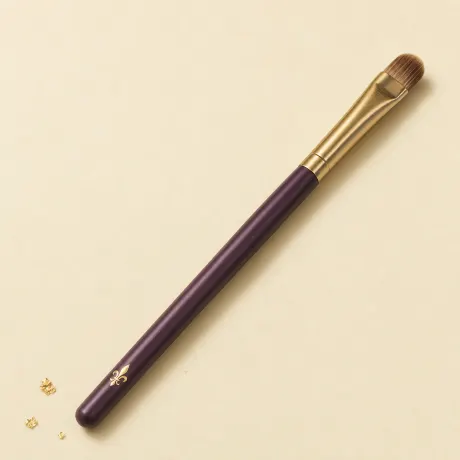
Mix on the back of the hand, not on the face. Take a little of the closest shade on a small flat brush, add a touch of the next shade lighter or deeper, and blend until the colour is even; then test it on the jaw, or beside the spot, in daylight. Add in small amounts, because a little of a deep shade changes a light one quickly. Mixing on the hand also warms the cream, which softens it for pressing on.
Keep the pans clean. A brush dipped from shade to shade carries each into the next, and within weeks every pan drifts towards the same muddy middle. Wipe the brush between shades, or lift each onto the hand separately. Where a palette includes correctors, use them first and only on the discolouration, then press a matched concealer over the top. Do not stir corrector into concealer: opposite colours cancel into a dull grey-brown. Once it is on, set a palette cream as you would any other, with a light press of powder over the spot and little or none under the eyes unless it creases.
Where it came from
Mixing shades is older than the palette. Stage greasepaint was sold by number: the colours of the Berlin greasepaint maker Ludwig Leichner ran from No. 1, the lightest, a scheme later makers followed, and a performer built a face from several of them — a ground colour first, then highlights and shadows from thinner sticks.[1] Max Factor’s flexible cream greasepaint for the cinema, developed in 1914 and later sold as Supreme Greasepaint, came in twelve graduated shades.[1]
Camouflage makeup made matching a method. Covermark, the cover cream Lydia O’Leary made for birthmarks and scars, came in eight shades by 1936 — made, as the historian James Bennett observes, with lighter skin in mind — and a first consultation was used to match them to each client. Its Complexion Cream existed to put back the shadows a covering layer erased, and a Covermark Chart for a Brunette of the same year mapped out a natural-looking face with contours, a scheme that, in Bennett’s words, required time, patience and practice.[2] Ordinary concealers went the other way: because they were worn with other makeup and did not have to match perfectly, most of those sold in the 1950s came in only four to six shades.[3] Neutralising concealers, which cancel a colour with its opposite, came later, though the makeup artist Marvin Westmore traced the idea to the 1920s and advised against it for everyday wear.[3] When the palette of mixable concealers passed from professional kits into shops, the sources cited here do not say.
The techniques
- Press
- Press product onto the skin without dragging, so it stays where it is put.
- Pat
- Tap lightly with a fingertip or damp sponge so product melts in rather than moves.
Sources
- [1]Greasepaint Cosmetics and Skin, 2010.View source (opens in a new tab) Accessed 2026-09-25.
- [2]Covermark Cosmetics and Skin, 2012.View source (opens in a new tab) Accessed 2026-09-25.
- [3]Corrective Make-up (Concealers) Cosmetics and Skin, 2016.View source (opens in a new tab) Accessed 2026-09-25.
What to apply it with
Other kinds of concealer
Liquid concealer
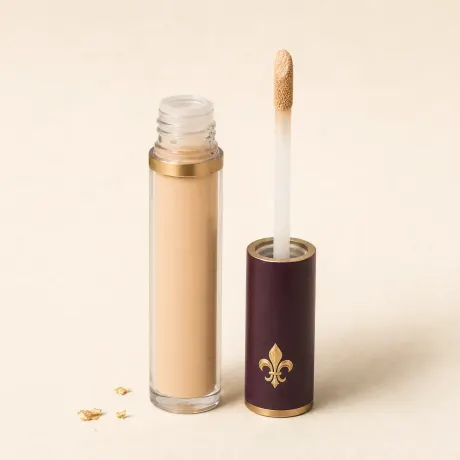
A fluid concealer in a wand tube, the most versatile form for the under-eye.
Read the guide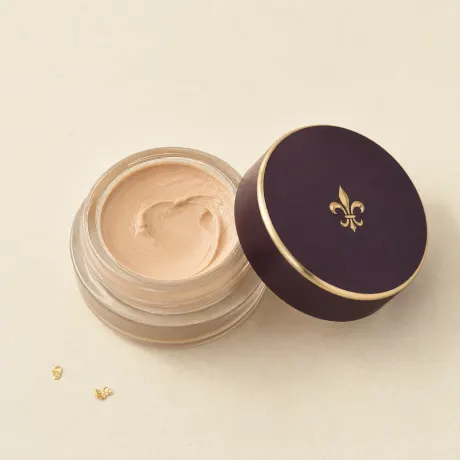
Cream concealer
A thick, high-coverage concealer in a small pot, for blemishes and deep shadow.
Read the guide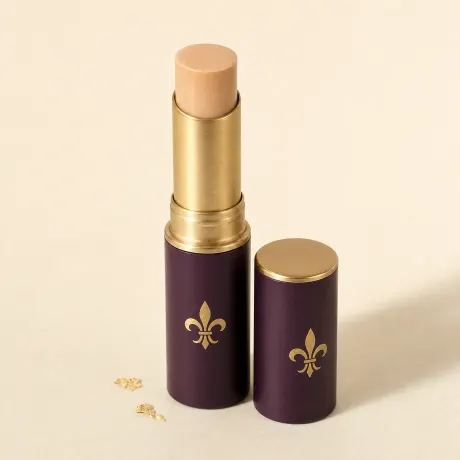
Stick concealer
A firm concealer in a slim twist-up case, for spot coverage.
Read the guide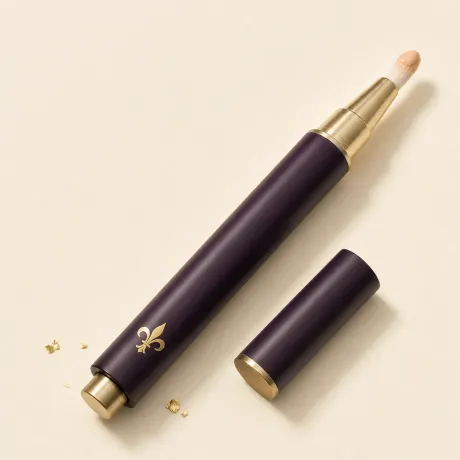
Brightening pen
A light-reflecting concealer in a click pen with a brush tip, for lifting shadows rather than covering them.
Read the guide