Diane de Poitiers and the Gold She Drank
A courtier praised her unpainted complexion and passed on a rumour. Her remains, analysed four centuries later, bore the rumour out.
HOM · Person? – 1566Courtier and favourite of Henri II of France
In short
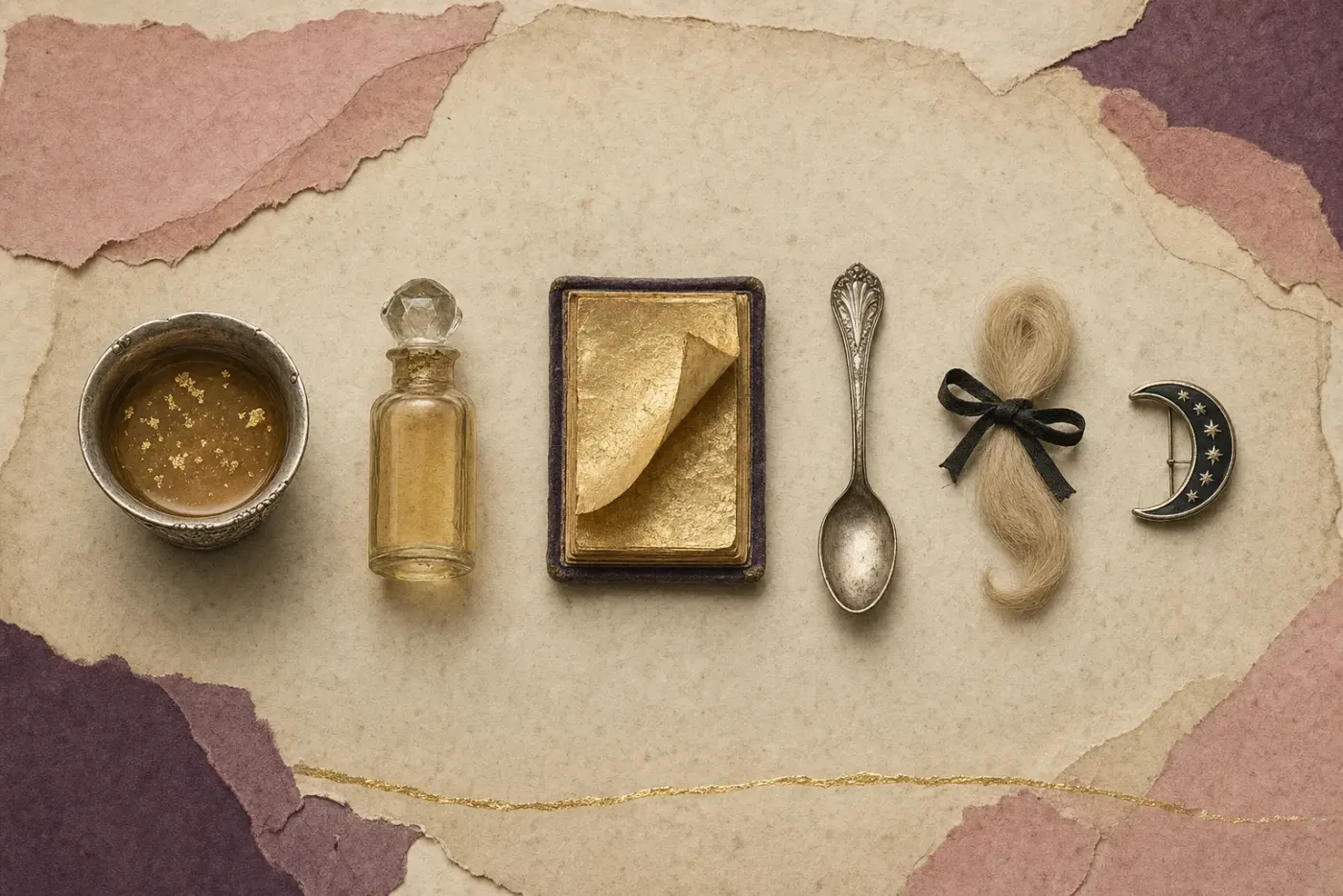
Brantôme wrote that Diane de Poitiers wore no paint but was said to take broths of drinkable gold each morning; analysis of remains exhumed at Anet in 2008, published in the BMJ in 2009, reported gold at about five hundred times the reference value.
- 3min read
- 4chapters
- 4sources
Vivien
Your guide through time
Listen to this essay
4 min listenVivien reads our essays aloud, word for word — every date and every name in its place — so you can listen the way you would be walked through a gallery.
An AI voice, designed for History of Makeup
Diane de Poitiers was the most powerful woman at the court of Henri II of France, and she was famous above all for looking as though she had not aged. The courtier and memoirist Brantôme, who saw her six months before she died, wrote that her beauty, her grace and her bearing were exactly what they had always been.[1] She died in 1566.[2]
In the same breath, he recorded how people said she managed it.
Without Paint
Brantôme's account is specific. He says he saw her at seventy as fair of face, as fresh and as lovable as at thirty; that she had broken a leg when her horse slipped on the paving at Orléans, and that it had not changed her face; and that above all she had a very great whiteness, sans se farder aucunement, without painting herself at all.[3] He was generous with her age. She was not yet seventy when she died.
Then comes the qualification. Mais on dit bien, but it is said, that every morning she took broths made with drinkable gold and other drugs, of the kind good physicians and subtle apothecaries prepare.[3] Brantôme does not claim to know. He reports what the court said.
What the Remains Showed
During the Revolution her remains were taken from the tomb and thrown into a pit outside the château walls.[4] In 2008 remains identified as hers were exhumed from the cemetery at Anet.[5] A French team led by the forensic specialist Philippe Charlier analysed them and published the results in the BMJ in 2009, under the title A gold elixir of youth in the 16th century French court.[6]
The gold was there. The concentration was reported as five hundred times the reference value, far above anything ordinary life supplies, and consistent with the habit Brantôme had heard about.[5]
Brantôme passed the gold on as gossip. The chemistry turned it into evidence.
Drinkable Gold
Drinkable gold, aurum potabile, had a respectable place in the medicine of the period. Gold does not tarnish, and a substance that did not decay was a plausible candidate for preserving a body that did. Apothecaries prepared it in solution; accounts of the practice describe gold made drinkable with the help of gold chloride and diethyl ether.[7]
It is worth being exact about what this case is. It is not a cosmetic applied to the skin. It is a regimen swallowed in pursuit of a complexion, and its evidence is unusually good: a named contemporary witness passing on a rumour, and a chemical result, more than four centuries later, that agrees with him.[8]
What Is Not Known
Whether the gold hastened her death. The reports of the study describe thin, brittle hair and fragile bones, consistent with long exposure, but a body four centuries old cannot settle a cause of death, and she was in her sixties in any case.[9]
Nor is it known how many others did the same. Drinkable gold was expensive, and the king's favourite was unusually well placed to buy it; one well-documented case says little about a fashion.
Sources
- [1, 3]Vies des dames galantes, Discours cinquième Written before the author's death in 1614 and printed posthumously; Project Gutenberg eBook #39220.View source (opens in a new tab) Accessed 2026-09-25.
- [2, 6, 8]A gold elixir of youth in the 16th century French court BMJ 339, b5311, 2009.View source (opens in a new tab)
- [4, 7, 9]French King's mistress overdosed on gold The History Blog, 18 December 2009, 2009.View source (opens in a new tab) Accessed 2026-09-25.
- [5]Diane de Poitiers, empoisonnée par son élixir de jouvence composé d'or potable Le Journal des Arts, 24 December 2009, 2009.View source (opens in a new tab) Accessed 2026-09-25.
Filed under