Lanolin
Identity
In current useas of 22 Sep 2026
- INCI name
- LANOLIN
- CAS
- 8006-54-0
- EC
- 232-348-6
- Origin
- Animal
- First attested
- 77 CE
- Also known as
- wool wax · wool fat · wool grease · adeps lanae · oesypum
What it does
How it is dated
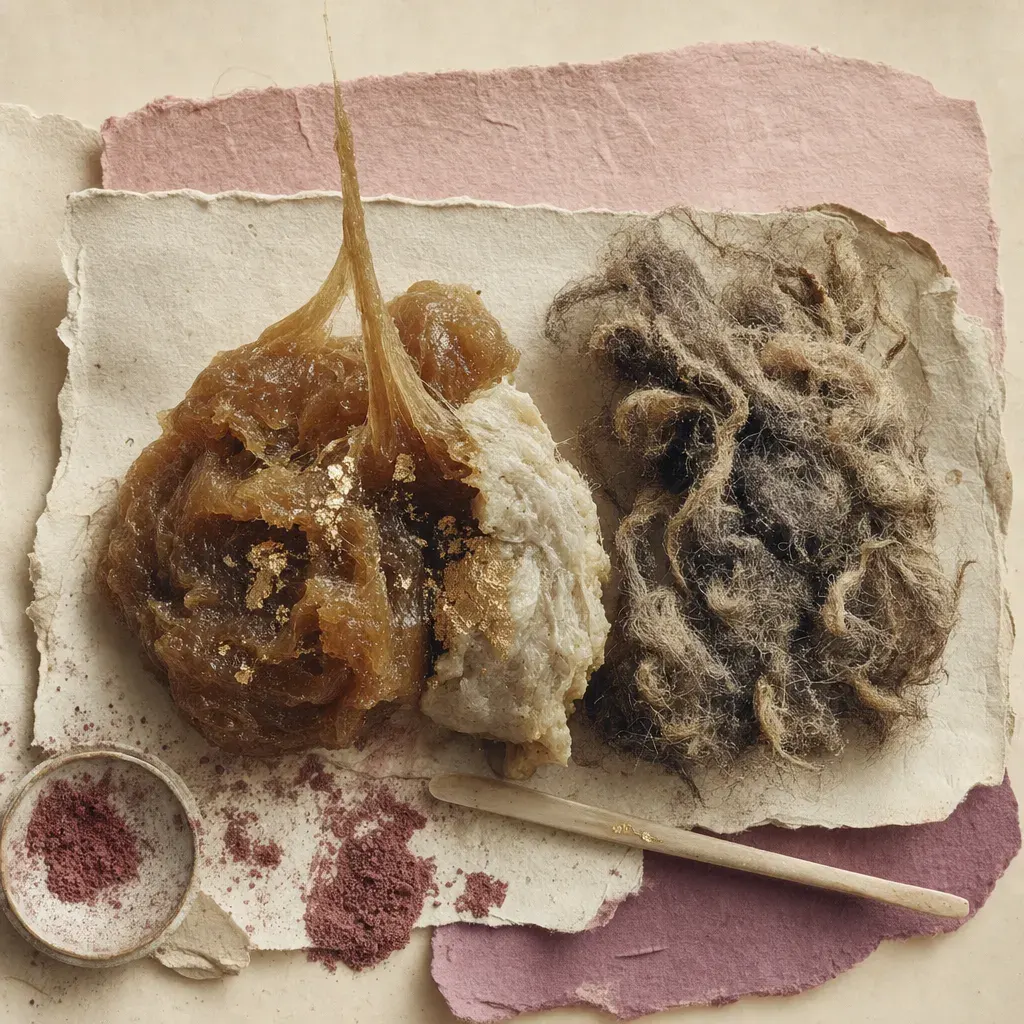
Pliny the Elder's Naturalis Historia, completed in the first century CE, gives a working method for rendering oesypum — the grease skimmed from unwashed fleece — in Book XXIX, chapter 10, and lists what it was used on.
No regulatory dataset is loaded. The status above is this archive's editorial summary of the documented record, not a statement of any substance's legal position in your jurisdiction, and nothing here is advice on whether to use it.
In short
The greasy secretion sheep make to keep their fleece from rotting in the rain, recovered from wool-scouring liquor: chemically a wax rather than a fat, despite the old pharmacy name wool fat.
- 3min read
- 4chapters
- 4sources

Vivien
Your guide through time
Listen to this entry
5 min listenVivien reads our essays aloud, word for word — every date and every name in its place — so you can listen the way you would be walked through a gallery.
An AI voice, designed for History of Makeup
Lanolin is the greasy secretion sheep produce to keep their fleece from rotting in the rain. It is recovered as a by-product of the wool trade, centrifuged or skimmed out of the liquor left behind when raw fleece is scoured.
Chemically it is a wax rather than a fat, which makes the old pharmacy name adeps lanae — wool fat — a misnomer that has outlived every attempt to correct it.[1] The distinction is not pedantry. It explains most of what lanolin does in a formulation.
What It Is
Ordinary fats and vegetable oils are triglycerides: three fatty acids hung on a glycerol backbone. Lanolin contains almost no glycerol. It is a mixture of esters formed between long-chain fatty acids and long-chain alcohols, among them cholesterol and lanosterol.[2]
Because dozens of acids can pair with dozens of alcohols, the material is not one compound but a population of several hundred, and its composition shifts with breed, pasture and the method used to recover it. That variability is why two lanolins from different suppliers can behave differently, and why the substance has been so awkward to standardise.[2]
The sterol fraction is what allows lanolin to take up water. Worked with water it forms a stiff water-in-oil emulsion holding more than its own weight, which is the basis of the pharmacopoeial hydrous grade.[2]
In History
Wool grease was in use long before it had a name. Pliny the Elder gives a chapter of the Naturalis Historia to oesypum: grease taken from unwashed fleece, boiled gently in a copper vessel, cooled, the fat lifted off, washed in cold water, strained through linen and bleached in the sun. He rates the Attic product the most highly esteemed, and describes its use against inflammation of the eyes and hardening of the eyelids.[3]
The modern material dates from the 1880s. Otto Braun patented a method for centrifuging the scouring liquor from wool washings in 1882, and it was with that process that the name lanolin — from lana and oleum — was coined. Large-scale production began in Germany, and by the end of the nineteenth century wool wax was being made in most European countries.[4]
What It Does
In colour cosmetics lanolin does three jobs at once. It softens the surface as an emollient. It is partly occlusive, slowing water loss without the dead weight of petrolatum. And it emulsifies, so a formulator can carry water or a water-soluble dye into an otherwise anhydrous stick.
It also wets pigment. Lanolin is polar enough to coat particles that a plain hydrocarbon leaves clumped, which matters in a lipstick or a cream blusher where colour has to disperse evenly and stay dispersed. Tack is the trade-off. A lanolin-heavy stick drags on the lip, and a great deal of formulating effort has gone into keeping the wetting while losing the drag.
Safety and Status
Lanolin is in current cosmetic use. It is not named in Annex II or Annex III of Regulation (EC) No 1223/2009, the European Union's lists of substances prohibited and restricted in cosmetic products, as of September 2026.[5] It is tracked under CAS 8006-54-0 and EC 232-348-6.[6]
The open question is contact allergy, and it is genuinely open. Lanolin has been a fixture of patch-test series for decades, but reported rates of positive reaction vary widely with the test preparation, its concentration and the population tested. Kligman patch-tested 943 women with no history of skin trouble and found no positive reactions at all, while far higher rates are reported from populations with stasis dermatitis.[7]
The name lanolin paradox belongs to something narrower than that variance, and it is worth keeping the two apart. Wolf coined the term in 1996 for a clinical mismatch: lanolin in a medicament applied to broken or eczematous skin can sensitise, while the same material in a cosmetic on intact skin generally does not. Lanolin, on that reading, is a weak sensitiser on normal skin and a real one on damaged skin, and reviewers continue to disagree over how much of the reported reactivity applies to the purified grades now sold.[7]
Sources
- [1, 2, 4, 7]Lanolin Allergy: History, Epidemiology, Responsible Allergens, and Management Dermatitis, vol. 19, no. 2, pp. 63–72, 2008.View source (opens in a new tab)
- [3]Naturalis Historia, Book XXIX, ch. 10 (Thirty-Two Remedies Derived from Wool-Grease) 77.View source (opens in a new tab) Accessed 2026-09-22.
- [5]Regulation (EC) No 1223/2009 on cosmetic products 2009.View source (opens in a new tab) Accessed 2026-09-22.
- [6]Lanolin — Substance InfocardView source (opens in a new tab) Accessed 2026-09-22.