The Trotula Texts: Women’s Medicine, Cosmetics Included
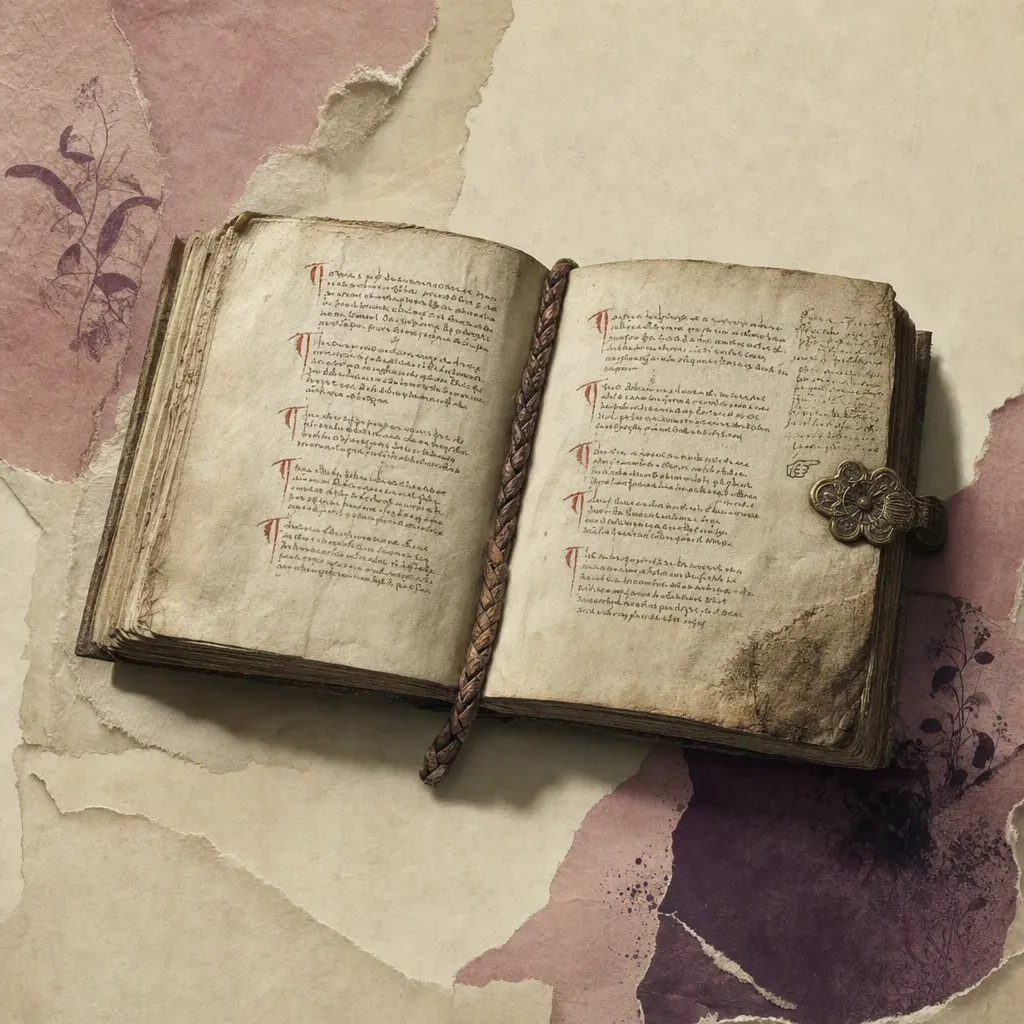
Three Salernitan texts travelled Europe bound together as one, and the third of them is a cosmetic treatise.
In short
The Trotula is not one book by one author but three Salernitan texts that circulated together, one of which — De ornatu mulierum, on women’s cosmetics — places cosmetic preparation squarely inside the medical literature of the twelfth century.
- 12min read
- 6chapters
- 3sources
Vivien
Your guide through time
Listen to this essay
6 min listenVivien reads our essays aloud, word for word — every date and every name in its place — so you can listen the way you would be walked through a gallery.
An AI voice, designed for History of Makeup
The Trotula is the most widely circulated body of writing on women’s medicine in medieval Europe, and almost everything commonly said about it requires qualification — including the name.[1]
What matters for this timeline is the least disputed part. One of the texts that travelled under that name is a treatise on cosmetics, and it travelled bound to medical writing rather than apart from it.[1]
That single fact does more damage to the popular picture of the medieval centuries than any individual recipe in it. A period supposed to have had no interest in the subject was copying a cosmetic treatise, inside its standard reference work on women’s medicine, for four hundred years.[1]
Three Texts, Not One
The critical edition establishes that the Trotula is an ensemble: independent Salernitan texts that came to circulate together and were read as a single work by later copyists and readers.[2]
The cosmetic treatise among them is De ornatu mulierum — on women’s adornment.[2] Treating the ensemble as one authored book, which centuries of readers did, is the source of most of the confusion that still attaches to it.
What It Actually Covers
The cosmetic material is practical and head-to-foot in its organisation: hair, face, teeth, breath, skin, and the treatment of blemishes, with preparation instructions rather than assertions about beauty.[3]
The register is the same one al-Zahrawi was writing in a century earlier, and the resemblance is not coincidence — Salerno sat on the transmission route by which Arabic medical writing entered Latin Europe.[4]
Head-to-foot organisation is worth pausing on, because it is not an arbitrary choice. It is the standard ordering principle of medical writing in this tradition, running from the crown downward, and a cosmetic treatise adopting it is announcing what kind of book it takes itself to be. The structure is the argument: this is a medical text, and it is organised like one.[3]
It travelled bound to medical writing rather than apart from it.
Who Wrote It
This is where care is required, because the popular version has hardened into something the scholarship does not support. A woman named Trota is associated with Salernitan medical practice; the three texts are not a single work by her; and the relationship between the historical figure and the compendium that bears a version of her name is precisely what the critical edition exists to untangle.[5]
The honest summary is that authorship is complicated and contested, and that any confident single-sentence attribution — in either direction, whether crediting or dismissing a woman author — is running ahead of the evidence.[5]
Why the Copying Matters
Manuscript survival is the closest thing this period offers to a circulation figure. A text preserved in many copies across many regions was wanted by many people, and the Trotula ensemble is among the most widely copied of its kind.[6]
That is the strongest available answer to the claim that the Middle Ages had no interest in cosmetics. A cosmetic treatise does not get copied for four centuries because nobody cared about the subject.[7]
What the Recipes Assume
The instructions assume a reader with access to a kitchen or a still-room, to heat, and to a range of plant and mineral materials — which locates the practice in households of some means rather than at either extreme of the social scale.[8]
They also assume competence. Nothing is explained from first principles, which means the text was written for someone who already prepared things, and it is evidence of an existing practice rather than an attempt to start one.[8]
There is a further assumption buried in the materials themselves. Several are imported, which means the reader is expected to have access to a market that carries them — and that places the practice inside a trading economy rather than a self-sufficient one. A recipe is a claim about supply as much as about technique.[8]
What Is Not Known
Whether any particular recipe was ever prepared is unknowable. Compilations copy from compilations, and a formulation can be transmitted for centuries without being made — the same caution that applies to every recipe collection on this site.[9]
The composition dates are also inferred rather than recorded, and the twelfth-century placement is a scholarly conclusion about a body of texts rather than a date on a document.[9]
And the ensemble changed as it travelled. Copyists added, dropped and reordered material, so no two surviving manuscripts agree entirely, and any statement about what the Trotula says has to specify which version it is describing.[9]
Sources
- [1, 2, 3, 5, 6, 8, 9]The Trotula: A Medieval Compendium of Women’s Medicine University of Pennsylvania Press, 2001.
- [4]Kitab al-Tasrif, Book 19: on adwiyat al-zinah (the medicines of adornment) 1000.
- [7]Fashions in Makeup: From Ancient to Modern Times Peter Owen, 1972.
Filed under