The Avon Boycott: The End of a Company’s Animal Tests
In 1989 an animal-rights group hung three million notices on American doors and called a boycott of the company that sold makeup on the doorstep. By the summer Avon had ended its animal tests, and said the campaign had nothing to do with it.
In short
In late June 1989 Avon announced that it was permanently ending product safety testing on animals, the first large cosmetics company to do so, after a PETA boycott and three million “Avon Killing” door-hangers; Avon said the campaign had nothing to do with its decision.
- 6min read
- 6chapters
- 7sources
Avon sold its makeup at the front door, and its advertising announced the visit: “Avon Calling.” In 1989 People for the Ethical Treatment of Animals went to the same doors, and hung door-hangers on three million American homes that read “Avon Killing.”[1]
By the end of June Avon had announced that it was permanently ending product safety testing on animals.[1] Whether the campaign caused that decision is the question the sources still leave open.
A Decade of Pressure
The campaign began where Henry Spira’s had left off. Spira had taken on Revlon in 1980, other companies had followed with money for alternatives, and by 1982 Avon had adopted a policy of using local anaesthetics wherever it expected an animal to suffer discomfort.[2] By Avon’s own count, its use of animals in tests fell from about 14,500 in 1981 to 2,423 by 1987 or 1988, depending on the report.[3][4]
PETA judged that not enough. Its campaign coordinator, Susan Rich, acknowledged Avon’s progress but decided to increase the pressure, and the group distrusted a company that lobbied against the bans on animal testing proposed in several states. Avon’s chairman, James E. Preston, said that several overseas markets required animal tests.[3]
Avon Killing
The campaign turned the company’s own channel against it. PETA members lobbied Avon’s door-to-door sellers, some of whom quit on learning of the tests, and the door-hangers went up across the country.[5][6] At the end of February 1989 PETA and Friends of Animals protested outside the hotel in Boca Raton, Florida, where the Cosmetic, Toiletry and Fragrance Association was holding its annual meeting.[5]
On 2 March Avon said it expected to stop animal testing within three months, and PETA launched an international boycott the same day; a petition of people pledging not to buy Avon products gathered 250,000 signatures. On 5 April Avon said it would replace the Draize eye test with Eyetex, a cheaper method performed on cell cultures — though the new policy still allowed its suppliers of raw materials to use the Draize test.[5]
The Pinocchio Award
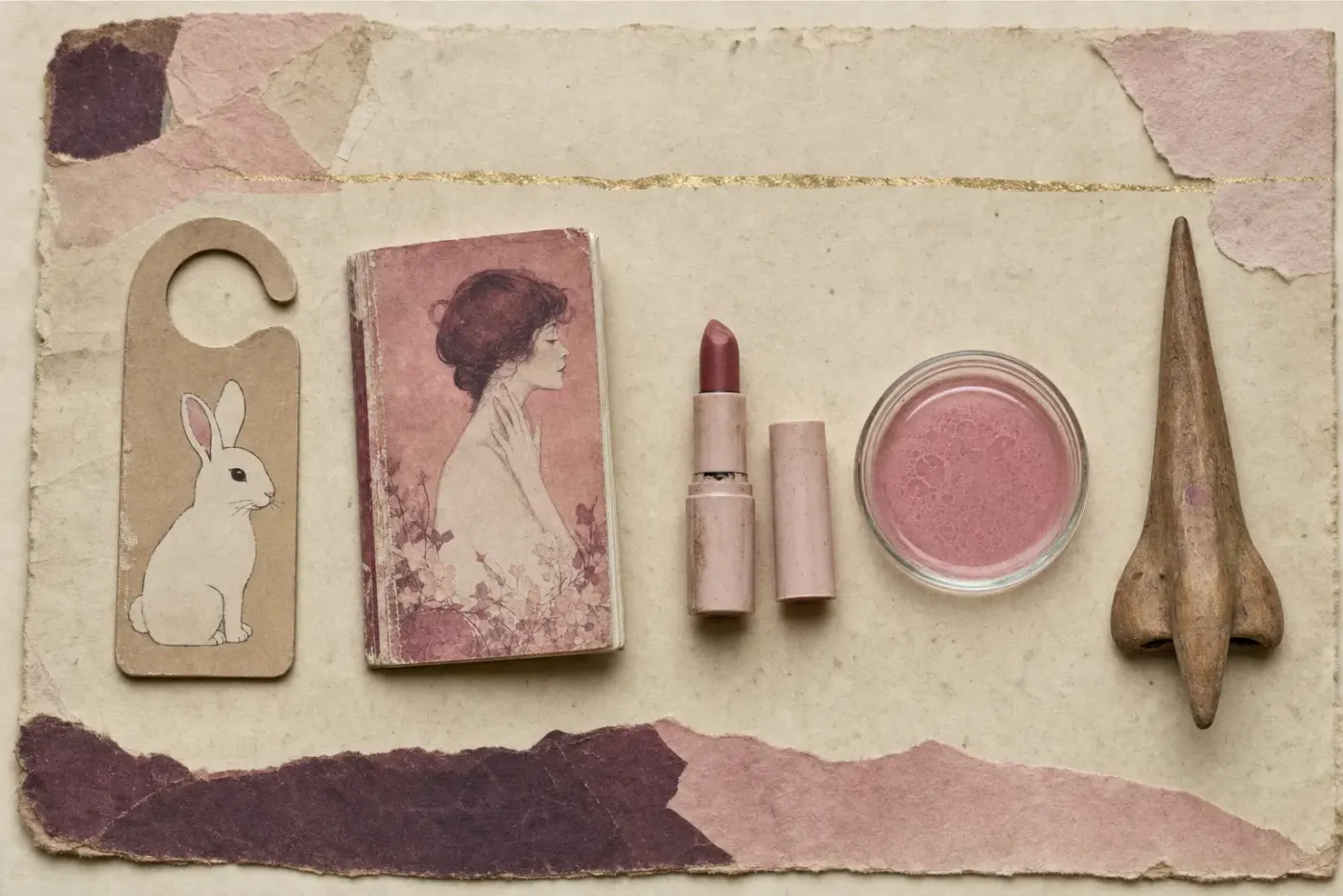
The deadline slipped. When Avon announced in June that it would need more time, PETA activists presented Preston with a “Pinocchio Award”, a ten-foot replica of a nose, and on 3 June protesters wearing Pinocchio noses gathered at Avon plants in Atlanta, Suffern, Cincinnati, Newark in Delaware, Pasadena and Morton Grove, and outside Preston’s home in Ridgefield, Connecticut.[7]
In late June 1989 Avon announced that it was permanently ending product safety testing on animals, the first large cosmetics company to stop altogether. It said that PETA’s campaign had nothing to do with the decision, and that it had already been on course to phase testing out.[7][8]
One doesn’t kick them in the head. It’s a disincentive for other companies to get involved.
Two Strategies
The movement disagreed with itself about the method. Spira, whose campaign had opened the decade, thought the Avon boycott counterproductive, since the company had already been responding.[10] PETA’s national director, Ingrid Newkirk, said the group had documents showing that 52,000 animals had died in Avon’s experiments since it promised to reduce them, and gave Spira the credit for the start. “Henry Spira is responsible for making Avon move on this issue in 1981. He is the person who exposed these tests,” she said. “But things were not moving. Everyone had become cozy.”[10]
Other companies moved after Avon. Revlon, Faberge, Noxell and Mary Kay each reduced, suspended or ended their testing, and one account records that Revlon, the company Spira had begun with, stopped using animals in 1989 as well.[11][12] In the same year the makeup artist Barbara Daly was selling her Colourings range through The Body Shop, a chain that counted “no animal testing” among its principles.[13]
What the Decision Covered
The law had never required the tests. The Federal Food, Drug, and Cosmetic Act does not specifically require cosmetics to be tested on animals, and leaves it to manufacturers to substantiate the safety of their products.[14] What had kept testing in use, a Humane Society official said in 1986, was the fear of product-liability suits and of the insurers behind them.[15]
Nor did one company’s decision end the testing of what went into its products. Avon’s April policy still let its suppliers of raw materials use the Draize test, and animal testing as a whole remained large: the Food and Drug Administration put the number of animals that companies used to test products and in scientific experiments at about 14 million in 1987.[16]
What Is Not Known
Whether PETA’s campaign changed Avon’s mind cannot be settled from these sources. Avon said it had nothing to do with the decision, and the database that records the campaign concludes that it is unclear whether the company would have stopped anyway.[17][18]
The figures vary between reports: Avon’s count of animals for 1981 is given as 14,500 and as 14,550, and its later figure of 2,423 is dated to 1987 by one account and to 1988 by the other.[17][18] And how far Revlon’s, Faberge’s, Noxell’s or Mary Kay’s changes went — reduction, suspension or an end — is not set out company by company in anything cited here.[17]
Sources
- [1, 3, 5, 7, 11, 16, 17]PETA pressures Avon to stop animal testing, United States, 1989 Global Nonviolent Action Database, Swarthmore College (entry of 3 December 2016), 2016.View source (opens in a new tab) Accessed 2026-10-03.
- [2]Henry Spira’s Search for Common Ground on Animal Testing Cambridge Quarterly of Healthcare Ethics 8(1), 9–22, 1999.View source (opens in a new tab) Accessed 2026-10-03.
- [4, 6, 8, 9, 10, 18]On the Cutting Edge of Animal Rights Activism Los Angeles Times, 28 April 1989, 1989.View source (opens in a new tab) Accessed 2026-10-03.
- [12]Caso coelhos-cosméticos Bioética, Universidade Federal do Rio Grande do Sul, 1997.View source (opens in a new tab) Accessed 2026-10-03.
- [13]Colourings: No hype, just good faces United Press International, 21 August 1989, 1989.View source (opens in a new tab) Accessed 2026-10-03.
- [14]Animal Testing & Cosmetics United States Food and Drug Administration (posted 31 May 1999; updated 5 April 2006).View source (opens in a new tab) Accessed 2026-10-03.
- [15]Household products and laboratory animal testing The Christian Science Monitor, 20 March 1986, 1986.View source (opens in a new tab) Accessed 2026-10-03.
Filed under