Sephora Kids: The Tutorial Gets Younger
By 2024 beauty was sold in short videos on the phone, and some of its most eager buyers were not yet teenagers.
In short
“Sephora kids” was the name given in 2023–24 to tweens buying influencer-promoted skincare; in May 2024 a California bill that would have barred sales of anti-ageing products containing retinoids or alpha hydroxy acids to children under 13 failed to advance in the State Assembly.
- 6min read
- 6chapters
- 5sources
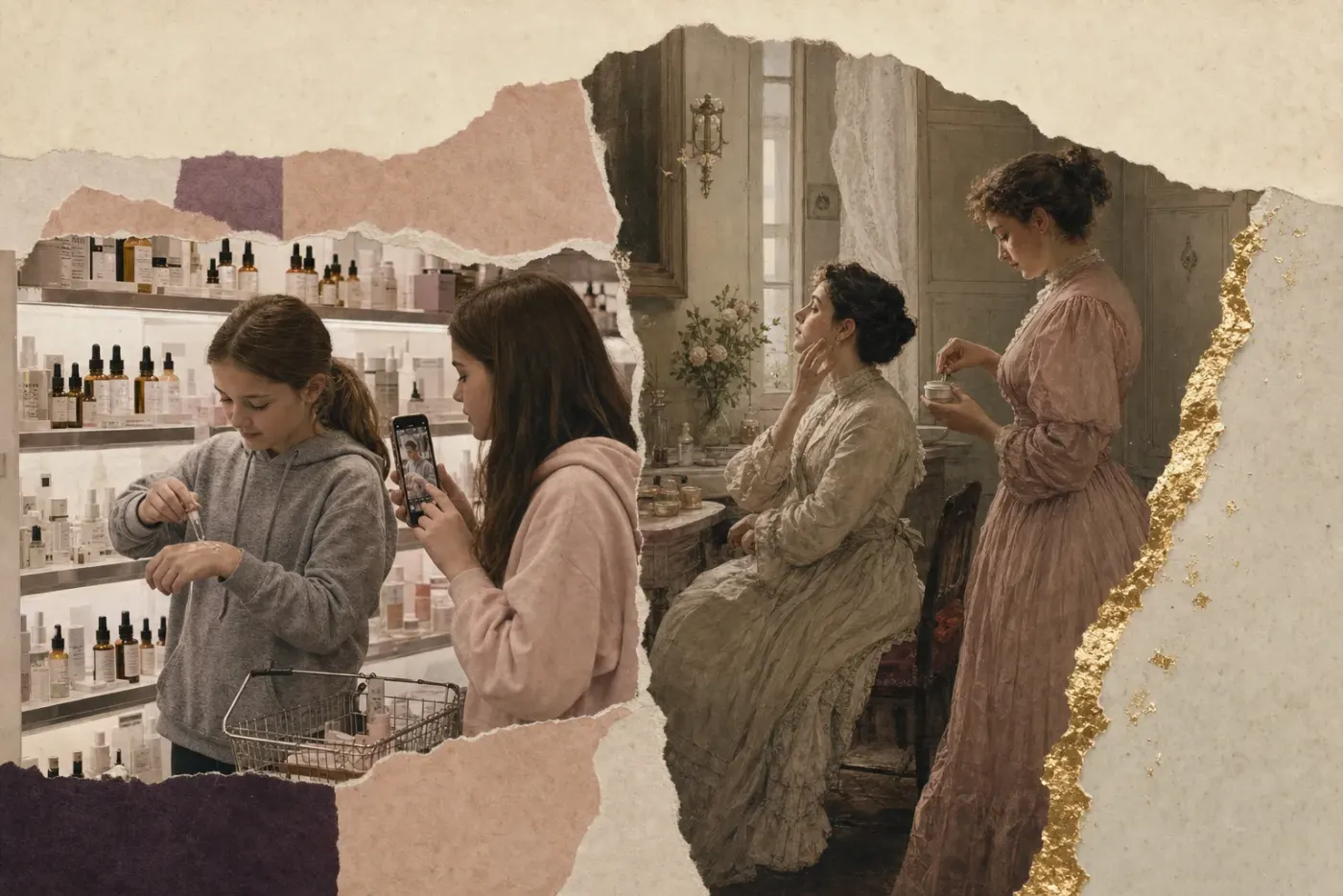
By the spring of 2024 the beauty business had a new customer, and a name for her. Tweens buying creams, gels, face masks and peels had become, in CNN’s words, “Sephora Kids”, and scores of TikTok and Instagram videos documented what adults online called a tween invasion of Sephora and Ulta stores.[1]
The products were mostly skincare. The way they were sold was the decade’s own: a short video, watched on a phone.
From YouTube to TikTok
The habit took hold in lockdown. With salons shut in 2020, people turned to YouTube makeup tutorials and home remedies, and TikTok became “a popular destination for trending beauty products, parodies, tutorials and hacks”; it gave that year #Soapbrows, brows shaped with a spoolie and an ordinary bar of soap.[2]
By 2023 the platform was moving goods. The Associated Press described #TikTokMadeMeBuyIt, in which users showed off what they had bought after seeing it there, and cited NPD Group data showing that TikTok had influenced purchases of skincare and fragrance more in 2022 than in 2021. Compared with Instagram and YouTube, the AP noted, TikTok was “fairly new to driving consumer behavior”.[3]
Trust
The format bred its own scepticism. Early in 2023 “de-influencing” videos, telling viewers which blushes, mascaras and skincare were not worth the money, drew more than 150 million views in a few months. Around the same time a makeup artist with 14.4 million TikTok followers was accused of wearing false eyelashes while promoting a L’Oréal mascara in a sponsored video.[4]
A marketing lecturer who had studied how Gen Z deals with creators told the AP that influencers’ “source credibility” was “slowly getting eroded”. The de-influencers were not always what they seemed either: some of the alternatives they recommended were listed on their own Amazon storefronts, where influencers earn commission.[4]
The Youngest Customers
What reached the youngest viewers was mostly skincare. A Sephora employee in New York told CNN that tweens came in without asking staff for advice and made “a beeline” for trendy, expensive brands hyped by influencers, Drunk Elephant, Glow Recipe and Laneige among them. Drunk Elephant’s online FAQ said that not every product in its line should be used by fans of 12 and under.[5]
The money was real. The market researcher Circana found that over the holiday season spending on higher-priced beauty, skincare included, grew 16 per cent among higher-income households with children under 18, against 6 per cent among households without children.[5] PBS NewsHour reported that households with tweens aged six to twelve had spent almost $2.5 billion on facial skincare the previous year, an increase of 27 per cent.[6]
It is certainly a good thing that these young individuals have awareness of their skin type, but they need to learn how to properly take care of it.
What Dermatologists Saw
Dermatologists described the cost. One in New York told CNN of patients aged ten to twelve arriving with “redness, burning, itching, scaling and rashes”, and of worsening acne from too many products; a colleague in Missouri said tweens had no need of retinol, sold as an anti-ageing ingredient.[8] A dermatologist in Manhattan told PBS NewsHour of children bringing in a shopping bag holding a twelve-step morning routine and a ten-step evening one, and agreed when the correspondent called their adviser “Dr. TikTok instead of Dr. Google”.[9]
None of them argued against skincare as such. What they recommended for young skin was short: a gentle cleanser, a moisturiser and sunscreen.[8][9]
A Bill That Failed
California tried to legislate. Assembly Bill 2491, introduced by the Democratic Assemblymember Alex Lee, would have barred children under 13 from buying over-the-counter anti-ageing products containing vitamin A or its derivatives, such as retinol, or alpha hydroxy acids; sellers would have had to take reasonable steps such as posting notices, checking ages at the till and refusing prepaid cards online.[10] The Personal Care Products Council, the industry’s trade association, called it a “hastily drafted attempt to use legislative force to stop a social media trend”.[10]
The bill passed the Assembly’s Environmental Safety and Toxic Materials Committee in April 2024 and failed to advance in May, after it came before the Appropriations Committee. Lee said he remained “committed to protecting children from the unnecessary harms of anti-aging products”.[10]
What Is Not Known
How much of the buying was makeup is not known. The reporting used here describes mostly skincare, though NBC News noted children sharing videos of their makeup routines as well as their skincare.[11] The market figures come from firms whose methods the reports do not set out, and PBS did not name the source of its own.[12]
Nor is it known what the trend did to the children in it beyond the cases dermatologists described. This account names none of them, and the sources record no measure of harm across the age group as a whole.
Sources
- [1, 5, 7, 8]The ‘Sephora kid’ trend shows tweens are psyched about skincare. But their overzealous approach is raising concerns CNN Business, 2024.View source (opens in a new tab) Accessed 2026-10-03.
- [2]2020 biggest beauty trends: DIY self-care, ‘Zoom face,’ genderless makeup CNN Style, 2020.View source (opens in a new tab) Accessed 2026-10-03.
- [3, 4]TikTok ‘de-influencers’ are urging viewers to buy less PBS NewsHour (Associated Press), 2023.View source (opens in a new tab) Accessed 2026-10-03.
- [6, 9, 12]Tween skincare obsession fuels industry boom and raises concerns PBS NewsHour, 2024.View source (opens in a new tab) Accessed 2026-10-03.
- [10, 11]California bill that aimed to combat tween skin care overuse fails to move forward NBC News, 2024.View source (opens in a new tab) Accessed 2026-10-03.
Filed under