Bi-phase eye makeup remover
Oil floating on water in one bottle, shaken together to take off waterproof mascara and long-wear eye makeup. How it works, how to use it on the eyes without scrubbing — and the waterproof makeup that made it necessary.
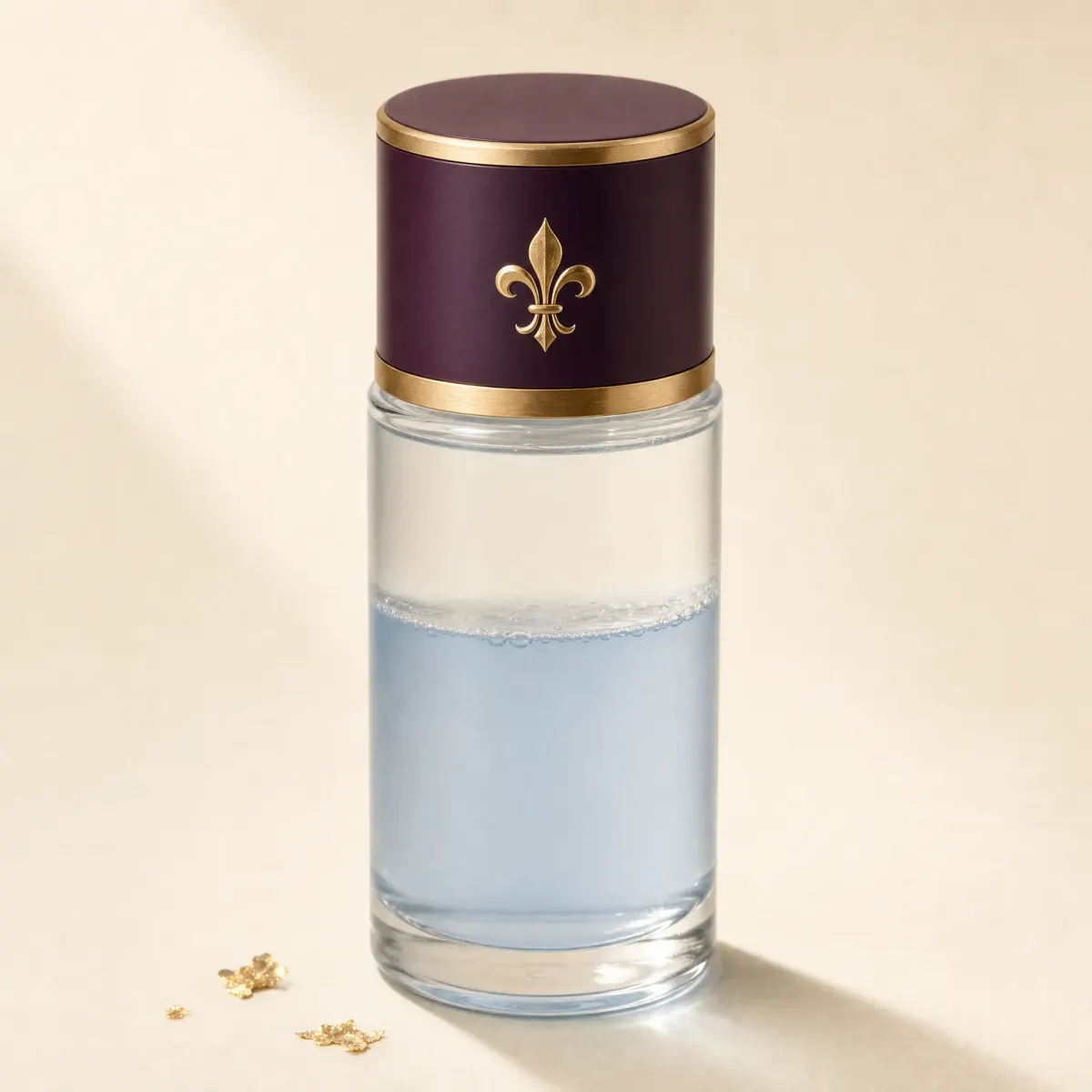
A bi-phase eye makeup remover is a liquid in two separate layers, an oily phase over a watery one, shaken together just before use so that the oil dissolves waterproof eye and lip makeup while the water keeps the finish light.
Our picks
Chosen for range: prestige, pharmacy and drugstore removers, heavier and lighter oil phases, removers for eyes and lips only and for the whole face, with houses from Japan and Korea beside the French and American ones. Each opens where its maker sells it, on Amazon or at the house’s own shop. “For sensitive eyes”, “ophthalmologist tested” and “hypoallergenic” are the makers’ claims.
As an Amazon Associate I earn from qualifying purchases. Affiliate links — we may earn a commission at no extra cost to you. How this works
Two-layer classicPrestige Lancôme
Bi-Facil Double Action Eye Makeup Remover
Lancôme’s two-layer eye remover, sold for sensitive eyes and contact-lens wearers.
- Bi-phase
- Sensitive eyes
- Contact lens wearers
Drugstore stapleDrugstore Neutrogena
Oil-Free Eye Makeup Remover
An inexpensive dual-phase remover its maker calls oil-free, with aloe and cucumber.
- Dual-phase
- Oil-free
- Waterproof mascara
No sticky filmMid-range AHAVA
Time To Clear Eye Make-up Remover
A bi-phase remover sold as lifting waterproof makeup without leaving the lids sticky.
- Bi-phased
- Waterproof makeup
Lids, lashes, lipsPrestige Clinique
Take The Day Off Makeup Remover For Lids, Lashes & Lips
Clinique’s remover for lids, lashes and lips, shaken until it clouds before each use.
- Lids, lashes and lips
- Oil-free
- Non-irritating
Long-wear eyesDrugstore Almay
Longwear & Waterproof Eye Makeup Remover Liquid
A drugstore remover for long-wear eye makeup, from one of the two houses that took the FDA to court over “hypoallergenic”.
- Dual-phase
- Ophthalmologist tested
- Hypoallergenic
Heavy eye makeupPrestige Clarins
Instant Eye Make-Up Remover
Clarins’s two-phase remover for heavy and waterproof eye makeup.
- Bi-phase
- Ophthalmologist tested
- Conditions lashes
Printed ratioMid-range Banila Co
Clean it Zero Lip & Eye Remover
A Korean remover that prints its balance: three parts oil to seven of water.
- Bi-phase
- Low pH
- Vegan
With ceramidesDrugstore CeraVe
Eye Makeup Remover
A bi-phase water-and-oil remover with ceramides, sold for waterproof mascara.
- Bi-phase
- Ceramides
- Waterproof mascara
Long-wear formulasPrestige Bobbi Brown
Instant Long-Wear Makeup Remover
A makeup artist’s house’s remover for long-wear eye and lip formulas.
- Dual-phase
- Conditions lashes
Japanese drugstoreDrugstore Bifesta
Eye & Lip Micellar Makeup Remover
A Japanese remover for eyes and lips, sold as non-greasy.
- Dual-phase
- Fragrance-free
- Made in Japan
Oil and waterMid-range DHC
Eye & Lip Makeup Remover
A Japanese oil-and-water remover with cork tree extract and vitamin E.
- Oil-water formula
- Shake before use
Eyes and lipstickPrestige Shiseido
Essentials Instant Eye and Lip Makeup Remover
Shiseido’s dual-phase remover, sold for waterproof eye makeup and long-lasting lipstick together.
- Dual-phase
- Waterproof makeup
Whole faceDrugstore Cetaphil
Gentle Waterproof Makeup Remover
An oil-free two-phase remover sold for the whole face as well as the eyes.
- Bi-phase
- Oil-free
- Fragrance-free
Light oil phaseMid-range heimish
All Clean Lip & Eye Makeup Remover
A Korean remover, eight parts water to two of oil by its maker’s account, for a lighter finish.
- Dual-phase
- Vegan
Made for MACPrestige MAC Cosmetics
Gently Off Dual-Phase Makeup Remover
MAC’s dual-phase remover, made to take off the brand’s own long-wear eye and lip colours.
- Dual-phase
- Waterproof mascara
Korean two-phaseDrugstore Illiyoon
Gentle Deep Eye Makeup Remover
A Korean two-phase remover for waterproof mascara, liner and lipstick.
- 2-phase
- Ophthalmologist tested
- Vegan
Stage and screenMid-range Cinema Secrets
Break It Down Waterproof Makeup Remover
A film and theatre makeup house’s remover, made for heavy set makeup.
- Dual-phase
- Face and eyes
Four-oil phasePrestige Dior
Le Biphase OFF/ON
Dior’s two-phase remover, its oily layer built from four oils.
- Biphase
- Waterproof makeup
Budget KoreanDrugstore Etude
Lip & Eye Remover
An inexpensive Korean lip and eye remover for waterproof mascara.
- Waterproof mascara
- Lips and eyes
Budget two-phaseDrugstore essence
Lash Princess Waterproof Eye Make-Up Remover
A budget two-phase remover with chamomile, from the house behind the Lash Princess mascara.
- 2-phase
- Chamomile
- Vegan
A bi-phase remover is the bottle on the shelf that looks unfinished: a clear layer floating on a watery one, often tinted, that will not mix until it is shaken. The top layer is oil, or light silicones and hydrocarbons that behave like oil; the bottom is water with a little mild cleanser and soothing ingredients. Shaken, the two form a brief, cloudy mixture that soaks into a cotton pad, and within a minute or two the bottle separates again.
The design is a compromise. Waterproof mascara, gel liner and long-wear lipstick resist water and need oil to dissolve them, but a pure oil around the eyes leaves a greasy film. A two-phase remover carries enough oil to shift the makeup and enough water to leave the skin feeling clean. Micellar water, which has no oil phase, struggles with waterproof formulas; a cleansing oil handles the whole face but has to be rinsed off.
How to use it on the eyes
Shake the bottle until the layers merge into one cloudy liquid; unshaken, the pad takes up mostly water and the remover does little. Soak a cotton pad, close the eye and hold the pad against the lid and lashes for ten seconds or so, long enough for the oil to loosen mascara and liner. Then wipe down and outward in one stroke rather than scrubbing back and forth. A second pad, folded and pressed under the lower lashes, catches what runs.
On the lips, press a soaked pad on for a few seconds and wipe. The oily phase leaves a light film, and several makers suggest washing or rinsing the face afterwards. Keep the cap closed, and shake the bottle every time you use it: the layers separate again within minutes.
When mascara will not budge
If mascara smears instead of lifting, the pad has usually moved before the oil had time to work. Soak a fresh pad, hold it on the closed eye for longer, twenty seconds rather than ten, and lift it away. A cotton bud dipped in the shaken remover picks out what is left at the roots of the lashes and in the inner corner. Glitter and heavy liner come away more cleanly if the pad is pressed on and lifted straight off rather than wiped across the lid.
Tubing mascaras are the exception. They are made to slide off the lashes in tiny sleeves with warm water and a little pressure, and oil does little to them. Whatever the makeup, resist scrubbing: rubbing tugs at the lashes, and a lash that breaks is simply gone until it grows back.
Choosing one
The balance between the layers varies, and some makers print it. One Korean remover gives its oil-to-water ratio as three to seven, another as two to eight. More oil dissolves heavier makeup and leaves more behind; less oil feels lighter but works more slowly on waterproof mascara. Some bottles are sold for eyes and lips only, others for the whole face, and a few are sold as oil-free, although they separate into two layers all the same. A narrow neck or a dispensing cap wets the pad without a splash; a wide-mouthed bottle tipped over a cotton pad rarely stops at the right moment.
Labels do the rest of the selling. “Ophthalmologist tested”, “hypoallergenic” and “for sensitive eyes” are the makers’ claims. In the United States there is no federal definition of “hypoallergenic” or similar terms, and the Food and Drug Administration says it knows of no studies showing that products sold that way cause fewer reactions than others.[1] If fragrance troubles your eyes, the ingredient list, not the front of the bottle, will tell you whether a remover contains any.
Where it came from
While makeup was built to come off with cream, cream took it off. Theatrical cold creams were sold to remove greasepaint, and as street makeup spread, cold cream was promoted for powder, rouge and lipstick too, spread on thickly and wiped away.[2]
Waterproof eye makeup changed the problem. The story goes that Helena Rubinstein launched a waterproof mascara at the New York World’s Fair of 1939, made for the swimmers of the Aquacade. The historian James Bennett calls the story very dubious and thinks the mascara more likely licensed from Vienna, from the woman he takes to be the “Mascara Countess”, Helene Winterstein, with the Aquacade as a publicity stunt. Rubinstein’s advertising in 1940 promised that powder, mascara and lipstick “stays on hour after hour in the water or out”; the claims were later softened to “water-resistant”.[3] Makeup that sheds water needs oil to take it off, and the long-wear makeup built on silicone resins resists soap and oil-based cleansers alike, according to a 2024 paper in the Journal of Cosmetic Science.[4] When the two-layer bottle first appeared is harder to say: the record found for this article does not date it.
The words on those bottles have a history of their own. In 1975 the FDA issued a rule that only products shown in human tests to cause fewer reactions than their competitors could be called “hypoallergenic”. Almay and Clinique, both makers of such cosmetics, challenged it, and an appeals court held it invalid.[5] Both houses sell a remover in the carousel below; the word on the label still means whatever its maker says it does.
The techniques
- Press
- Press product onto the skin without dragging, so it stays where it is put.
Sources
- [1, 5]"Hypoallergenic" Cosmetics US Food and Drug Administration, 2000.View source (opens in a new tab) Accessed 2026-09-26.
- [2]Cold Creams Cosmetics and Skin, 2009.View source (opens in a new tab) Accessed 2026-09-26.
- [3]Helena Rubinstein (1930-1945) Cosmetics and Skin, 2009.View source (opens in a new tab) Accessed 2026-09-22.
- [4]Effects of Prebiotic Micellar Solution on Makeup Removal and Skin Microbiome Balance Journal of Cosmetic Science 75 (6): 553–564, 2024.View source (opens in a new tab) Accessed 2026-09-26.
Other kinds of removers
Micellar water
A water-based cleanser whose micelles lift makeup without rinsing.
Read the guide
Cleansing balm
A solid balm that melts into an oil on the skin, dissolving long-wear makeup, then rinses to a milk.
Read the guide
Cleansing oil
An oil that dissolves makeup and turns milky with water so it rinses clean.
Read the guide