Smoothing primer
A clear gel, usually of silicone, worn under foundation so that the base glides over a smoother surface. What it is made of, how to choose and apply one, and why nobody can say for certain who sold the first.
A smoothing primer is a clear or translucent gel, usually of silicone, smoothed on before foundation to leave a thin, slippery film over fine lines and pores, so that the base glides on evenly and the skin looks smoother.

Our picks
Chosen to cover the range of smoothing primers — classic silicone gels, creams, water-based and silicone-free versions, with and without a sunscreen — and of budgets, from drugstore to prestige. Each opens where its maker sells it, on Amazon or at the house’s own shop. What each does for pores and lines is its maker’s claim.
As an Amazon Associate I earn from qualifying purchases. Affiliate links — we may earn a commission at no extra cost to you. How this works
The originalMid-range Smashbox
The Original Photo Finish Smooth & Blur Primer
Smashbox’s original primer: a clear, velvety gel, and still the plainest version of the idea.
- Clear gel
- Smooths and blurs
- Vitamins A and E
Everyday smoothingDrugstore e.l.f. Cosmetics
Poreless Face Primer
An inexpensive smoothing primer with a silky slip, for everyday pores and texture.
- Silky
- Tea tree
- Vitamins A and E
Matte canvasPrestige Lancôme
La Base Pro Perfecting Makeup Primer
Lancôme’s oil-free smoothing primer, for a matte, even base under foundation.
- Oil-free
- Smoothing
- Controls shine
Pore diffusingMid-range Rare Beauty
Always An Optimist Pore Diffusing Primer
A soft gel that sits between smoothing and mattifying, for skin that is a little of both.
- Gel
- Pores and fine lines
- Hydrating
Silicone blurDrugstore NYX Professional Makeup
Pore Filler Blurring Primer
A silicone blurring gel at a drugstore budget, and the simplest way to try the idea.
- Silicone blend
- Blurring
- Vegan
With SPFPrestige Hourglass
Veil Mineral Primer
An airy, silky smoothing primer with a sunscreen, sold as concealing redness as well.
- Oil-free
- SPF 15
- Silky texture
Soft matteMid-range Tarte
face tape smoothing primer
A long-wear smoothing primer that dries to a soft matte, for foundation that has to last.
- Soft matte
- Long-wear
- Hyaluronic acid
Pore eraserDrugstore Maybelline New York
Baby Skin Instant Pore Eraser
A clear, inexpensive pore primer with a matte finish, for the nose and the centre of the cheeks.
- Clear
- Blurs pores
- Matte finish
Fine linesPrestige Clarins
Instant Smooth Perfecting Touch Face Primer
The one for lines as much as pores: a melting veil sold as filling them in before foundation.
- Melting texture
- Soft-focus pigments
- Lines and pores
Clean gelMid-range bareMinerals
PRIME TIME Original Foundation Primer
A smoothing gel from a house known for loose mineral foundation.
- Gel
- Sea water
- Vitamins C and E
Acid-infusedDrugstore L'Oréal Paris
Prime Lab Up to 24H Pore Minimizer
A drugstore pore primer with AHA, LHA and BHA in the formula, for texture as well as pores.
- AHA, LHA and BHA
- Smoothing
- Up to 24h wear
Cream veilPrestige Clé de Peau Beauté
Correcting Cream Veil SPF 21
A creamy smoothing primer with a sunscreen, for texture on skin that is also dry.
- Moisturising
- Smooths texture
- SPF 21
Mature skinMid-range Laura Geller
Spackle Skin Perfecting Primer: Original Clear
Sold with mature skin in mind: a clear primer for fine lines as much as for pores.
- Clear
- Fine lines and pores
CreamyDrugstore Revlon
PhotoReady Prime Plus Perfecting and Smoothing Primer
A creamy rather than gel primer, for drier skin that still wants a smoothing step.
- Creamy
- Hydrating
- Even, smooth look
FeatherweightPrestige Tatcha
The Liquid Silk Canvas
The liquid sister of Tatcha’s balm primer: lighter, and spread rather than pressed.
- Featherweight
- Liquid
- Longer-lasting make-up
WhippedDrugstore Milani
Conceal + Perfect Blur Out Smoothing Primer
A soufflé-textured smoothing primer that also moisturises, for skin that is both textured and dry.
- Whipped texture
- Soft-focus
- Glycerin and niacinamide
Blur and gripMid-range ONE/SIZE
Secure The Blur Makeup Magnet Primer
A blurring primer that also grips, for long days in full make-up.
- Blurring
- Grips make-up
- Up to 12h wear
Cream-gelDrugstore ColourPop
Set It Up Pretty Fresh Primer
An inexpensive airbrush-style primer that blurs and holds back some shine.
- Cream-gel
- Blurs pores
- 8h shine control
Silicone-freeDrugstore Hard Candy
Blur on Lock Primer
For those who avoid silicone: a blurring primer made without it, at a drugstore budget.
- Silicone-free
- Soft-focus
- Up to 12h wear
A smoothing primer is a clear or faintly milky gel that goes on after skincare and before foundation. Most are made largely of silicone. The fluid part is usually dimethicone, often with a volatile silicone that evaporates after spreading; the body comes from a silicone elastomer, a crosslinked silicone swollen in silicone oil, which gives the gel its dry, velvety slip. Spread thinly, it leaves a fine film over shallow lines and in the mouths of pores. That is what makers mean when they sell a primer as “blurring” or “pore-minimising”: the skin underneath is unchanged, but its surface is more even, so it catches less light, and foundation glides across it instead of collecting in it. A newer group, sold as silicone-free, aims at the same effect with water gels and fine powders.
It is the plainest of the primers, and the one the others are variations on. A pore-filling balm is the same idea in a firmer, waxier form, pressed into particular pores rather than smoothed over the face. A mattifying primer adds powders that absorb oil and is chosen for shine rather than texture; a hydrating primer is mostly water and is chosen for dryness; an illuminating primer carries pearl. A smoothing primer adds no colour and no glow. Its only job is the surface.
Choosing one
The first decision is how much silicone you want. The classic formulas are silicone through and through, with a dry, powdery slip and a finish that stays velvety all day. Newer “perfecting” primers carry a lighter silicone film in a water gel, and some are made without silicone at all; they feel fresher on the skin, and whether they blur as much is worth testing on your own face. If pores and fine lines are what you notice in the mirror, the heavier gel does more. If your skin is dry, either can sit on flaky patches and make them more obvious, and a hydrating primer, or simply a good moisturiser, will serve you better there.
The second is what goes on top. The usual advice is to match like with like, a silicone primer under a silicone foundation and a water-based one under a water-based formula, and it is a sensible starting point rather than a law. The real test is what happens as you blend. If the foundation rolls into small balls, streaks or refuses to settle, the two layers are working against each other, or there is too much of one of them. A primer and a foundation that both list dimethicone or cyclopentasiloxane near the top usually sit together without trouble.
Some smoothing primers add a sunscreen and are sold on an SPF number. Treat that as the maker’s claim for a layer worn thinly, not as the day’s sun protection.
How to apply it
Let skincare, and any sunscreen, sink in for a few minutes first; silicone smoothed over a wet cream slides about and can pill. Then take a pea-sized amount, less than seems right, and pat it into the places that need it, usually the nose, the centre of the cheeks and the forehead, rather than spreading it over the whole face. Patting and pressing leave the film where it is wanted; rubbing drags it off the pores and rolls it into flakes with whatever is underneath.
Give it a minute to settle while the lighter silicones evaporate and the film sets. Foundation then goes on best pressed or stippled, with a damp sponge or a dense brush, so that it is laid over the primer instead of dragging it away. If the foundation slips, separates or looks greasy by midday, you have used too much primer, not too little.
At night, remember that the film was made to resist water. A cleansing oil or balm, or a second cleanse, removes it more thoroughly than a single wash.
Where it came from
The primer as a product of its own is young, and who sold the first one is disputed. Laura Mercier’s line was launched in 1996, and a fashion site credited it in 2019 with “introducing a pre-makeup priming step to consumers in the first place, back in 1996 when the brand first launched”.[1] Smashbox, which began as a Los Angeles photo studio in 1990 and became a make-up brand in 1996, launched its Photo Finish primer in 2000; in 2025 the brand’s general manager said that “there really weren’t primers out back in 2000”.[2] Both accounts come from the brands or from coverage of them, they cannot both be right, and the record does not settle it.
What made the smoothing primer possible was a material. A Dow Corning patent filed in March 1996 and granted in August 1997 describes silicone elastomers swollen into gels and pastes that “spread smoothly on the skin”, names foundations among the make-up they could go into, and promises a “dry, silky-smooth” feel.[3] The patent says nothing about primers, and nothing here shows that any primer was made from it: the likeness is one of chemistry, not a recorded line of descent. But the velvety slip it describes is the one a smoothing primer still has.
Today the primer also comes in hydrating, mattifying, illuminating and colour-correcting kinds, and in 2025 a search for “primer” on Ulta’s website returned 242 results.[2] The clear gel is still the one the others are measured against.
The techniques
- Pat
- Tap lightly with a fingertip or damp sponge so product melts in rather than moves.
- Dot and blend
- Place small dots of product, then blend them outward.
Sources
- [1]Laura Mercier's New Pure Canvas Primers Are Reinvented Versions Of The Brand's Cult Classic The Zoe Report, 27 December 2019, 2019.View source (opens in a new tab) Accessed 2026-09-26.
- [2]Glossy Pop Newsletter: Smashbox aims to reclaim relevance by refocusing on its OG products Glossy, 22 August 2025, 2025.View source (opens in a new tab) Accessed 2026-09-26.
- [3]Silicone oils and solvents thickened by silicone elastomers. United States Patent 5,654,362, assigned to Dow Corning Corporation, filed 20 March 1996, granted 5 August 1997 United States Patent Office, 1997.View source (opens in a new tab) Accessed 2026-09-26.
Other kinds of primer
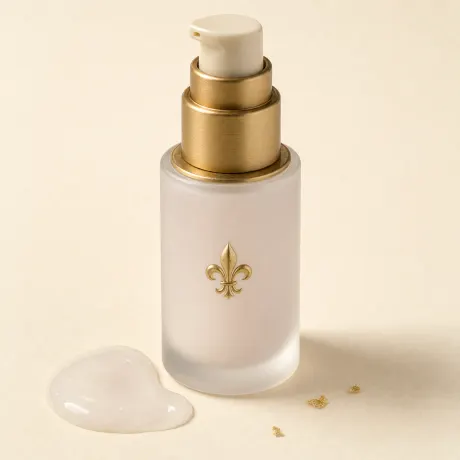
Hydrating primer
A water-light gel or milk that plumps dry skin so the base does not catch on dry patches.
Read the guide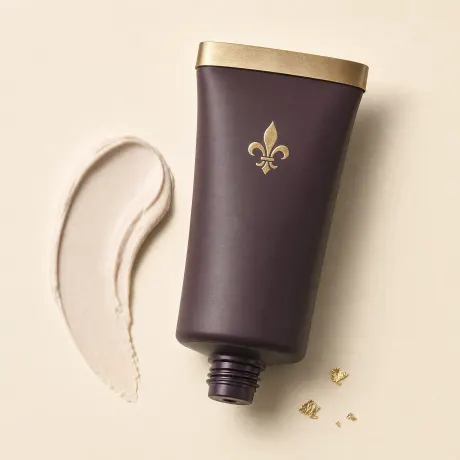
Mattifying primer
An oil-absorbing primer that keeps shine down through the day.
Read the guide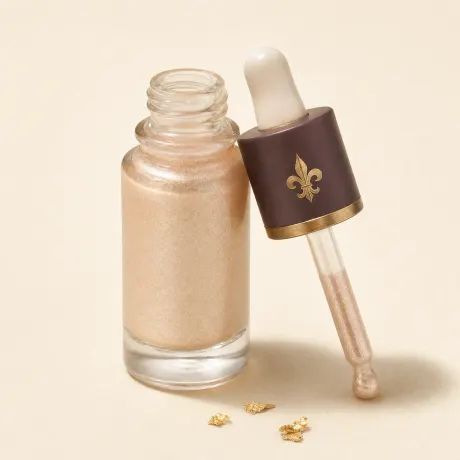
Illuminating primer
A pearly base that lends the skin light from underneath the foundation.
Read the guide
Pore-filling balm
A waxy, translucent balm that sits in pores and fine lines so they stop catching the light.
Read the guide