Pore-filling balm
A firm, translucent balm pressed into pores so that they catch less light. How it differs from a smoothing gel, how to use one, what it can and cannot do, and two centuries of trying to close the pores instead.
A pore-filling balm is a firm primer, usually of silicones with little or no water, pressed into visible pores and fine lines before make-up so that they cast less shadow and foundation passes smoothly over them.

Our picks
Pore-filling balms are a small kind, and these are the eight that could be verified as sold to US readers by their makers: balms, putties and twist-up sticks, from drugstore to prestige. Each opens where its maker sells it, on Amazon, at the house’s own shop or at Sephora. What each does for pores is its maker’s claim.
As an Amazon Associate I earn from qualifying purchases. Affiliate links — we may earn a commission at no extra cost to you. How this works
Pore balmMid-range Benefit Cosmetics
The POREfessional Face Primer
A balm that grew into a whole range of pore products, and the natural place to start.
- Balm
- Minimises the look of pores
Targeted stickDrugstore NYX Professional Makeup
Pore Filler Targeted Primer Stick
An inexpensive stick for the nose and cheeks only.
- Stick
- Targeted
- Blurring
Silk balmPrestige Tatcha
The Silk Canvas
A velvety balm to press into pores rather than across them, from a skincare-led house.
- Priming balm
- Pressed silk
- Velvety
PuttyDrugstore e.l.f. Cosmetics
Poreless Putty Primer
A putty rather than a balm by name, pressed in the same way, and inexpensive.
- Putty
- Grips make-up
- Blurs
Twist-up stickMid-range Milk Makeup
Pore Eclipse Matte Blur Stick
The balm in a twist-up stick, drawn straight onto the nose and patted in.
- Stick
- Blurs pores
- Up to 16h wear
Silicone-freeDrugstore wet n wild
Impossible Primer Stick
A primer stick made without silicone, for those who avoid it.
- Stick
- Silicone-free
- Soft-focus
Balm-to-powderMid-range Nudestix
Blot & Blur Matte Primer Stick
A balm that dries to a powder finish, sold for touching up shine as well as priming.
- Balm-to-powder
- Stick
- Shine control
Transparent stickMid-range Mented Cosmetics
Perfect Prime Primer
A stick that goes on transparent, swiped on in a few strokes and patted in.
- Stick
- Transparent finish
- Controls shine
A pore-filling balm is a primer in solid form: a firm, translucent balm, clear or faintly tinted in the pot and sheer on the skin. It contains little or no water. Most are built on silicones, elastomers and waxy silicones that stay firm at room temperature and soften on a warm fingertip, and a few on waxes and oils instead, sold as silicone-free; many add a fine powder such as silica for a soft-focus finish. Pressed into the skin, a balm settles into the openings of enlarged pores and into shallow lines and fills them roughly level with the skin around them, so that they cast less shadow and foundation passes over them instead of sinking in.
It is the targeted cousin of the smoothing primer. A smoothing gel is spread thinly over the face to change the whole surface; a balm is denser, stays where it is put, and is pressed into the few places where pores show most. It comes in a pot, a flat compact, a squeeze tube or a twist-up stick, and the balm is much the same in each. What it is not is a treatment. It hides pores, and anything a label says about shrinking them is the maker’s claim.
How to use it
Use it where the pores are, not everywhere. For most people that means the nose, the inner cheeks and the chin, and sometimes the forehead. After skincare has sunk in, take a very small amount on a fingertip, since a pot goes a long way, and warm it for a second. Then press it into the skin, or roll the fingertip over the area in small circles, working it into the pores rather than across them. Rubbing spreads it thin and leaves the pores unfilled.
Wait a minute before foundation, and lay the foundation on by pressing or stippling with a sponge or a dense brush; a brush swept across the balm lifts it back out. A stick can be drawn straight onto the skin and patted in. Several makers also sell their balms for wear on bare skin, or for pressing on over make-up in the afternoon to take down shine. Over foundation, press it on; never swipe.
Pot, compact, tube or stick
The balm itself varies less than the case it comes in, and the case changes how you use it. A pot or a flat compact holds the firmest balms and gives the most control over how little you take, but it means dipping a finger into it every morning, so wash your hands first and close it tightly afterwards. A squeeze tube keeps the balm cleaner and suits softer formulas; squeeze out less than a pea. A stick is the one to carry. It can be run straight over the nose or pressed onto a shiny patch in the afternoon, but it lays down more than a fingertip does, so pat it in afterwards.
Some balms are clear, and some are lightly tinted and sold as suiting a range of skin tones. A clear balm is the safer choice under foundation; a tinted one earns its place on days when you wear nothing over it.
What it can and cannot do
A balm changes how pores look, not what they are. Under a sheer foundation the effect can be close to invisible; under a heavy or shimmering one, large or scarred pores still show, because light catches the edges the balm cannot reach. Used too thickly, it makes foundation slip and separate over the nose by midday, and it can pill over rich skincare. A thin layer, pressed in and left alone, does more than a thick one.
Nor is it a full answer to shine. Most balms leave a soft, dry-feeling surface, but on oily skin that surface wears through by the afternoon, and a mattifying primer on the rest of the T-zone makes a better partner than a second layer of balm.
Because a balm is made to cling to the skin and to resist water, take it off properly at night. A cleansing oil or balm, followed by your usual cleanser, removes it without scrubbing; a single wash may leave some behind.
Where it came from
Pores worried beauty writers long before there was a balm to fill them. Nineteenth-century advice on the complexion was preoccupied with closing pores, clearing them and keeping them from blocking, and the twentieth-century beauty business sold products to match: an Elizabeth Arden Venetian Pore Cream is recorded in 1912, and a Helena Rubinstein Valaze Blackhead and Open Pore Paste in 1916.[1]
Much of that rested on a mistake. Beauty writers believed that pores were opened and closed by muscles, which an astringent or a rub with ice could tighten after cleansing, so that the cream or powder that followed would not clog them. There are no such muscles, and the tightening an astringent gives is largely a sensation, and does not last. In the 1940s the US Food and Drug Administration disallowed claims that astringents could close pores.[2]
The pore-filling balm gives up the promise to change the pore and offers to hide it instead. Benefit put the pore into the name of a primer with its POREfessional, which a 2023 report described as “a balm designed to minimize the look of pores”, “novel at the time” of its launch more than thirteen years before.[3] What such a balm sells is optics: a pore filled level with the skin around it casts less shadow, and nothing about it has been closed.
The techniques
- Press
- Press product onto the skin without dragging, so it stays where it is put.
Sources
- [1]Enlarged Pores Cosmetics and Skin, 2018.View source (opens in a new tab) Accessed 2026-09-26.
- [2]Skin Tonics, Astringents and Toners Cosmetics and Skin, 2010.View source (opens in a new tab) Accessed 2026-09-26.
- [3]Benefit Has Skin Care: I Tried 6 Porefessional Products Refinery29, 6 March 2023, 2023.View source (opens in a new tab) Accessed 2026-09-26.
Other kinds of primer
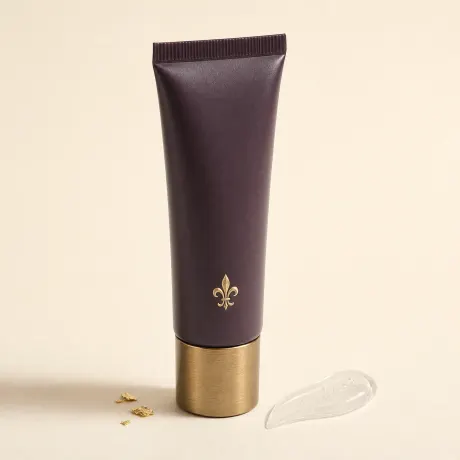
Smoothing primer
A silicone gel that fills fine lines and pores so the base glides over a smoother surface.
Read the guide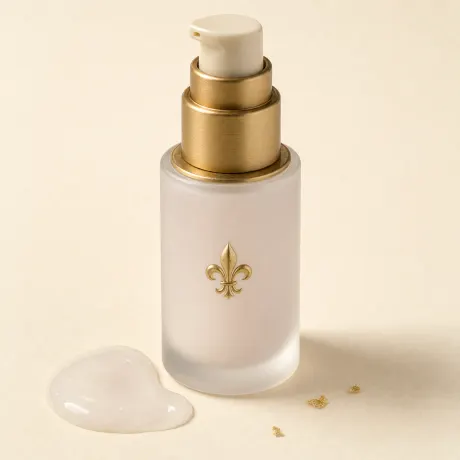
Hydrating primer
A water-light gel or milk that plumps dry skin so the base does not catch on dry patches.
Read the guide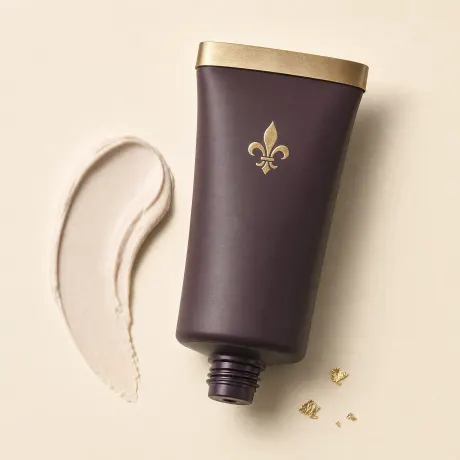
Mattifying primer
An oil-absorbing primer that keeps shine down through the day.
Read the guide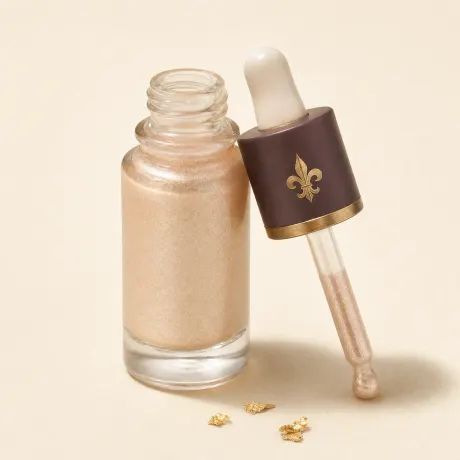
Illuminating primer
A pearly base that lends the skin light from underneath the foundation.
Read the guide