Lip palette
Several cream lip colours in one flat case, mixed and applied with a brush: the makeup artist’s way with lipstick. What a palette is for, how to mix and apply from one — and the older habits it grew out of.
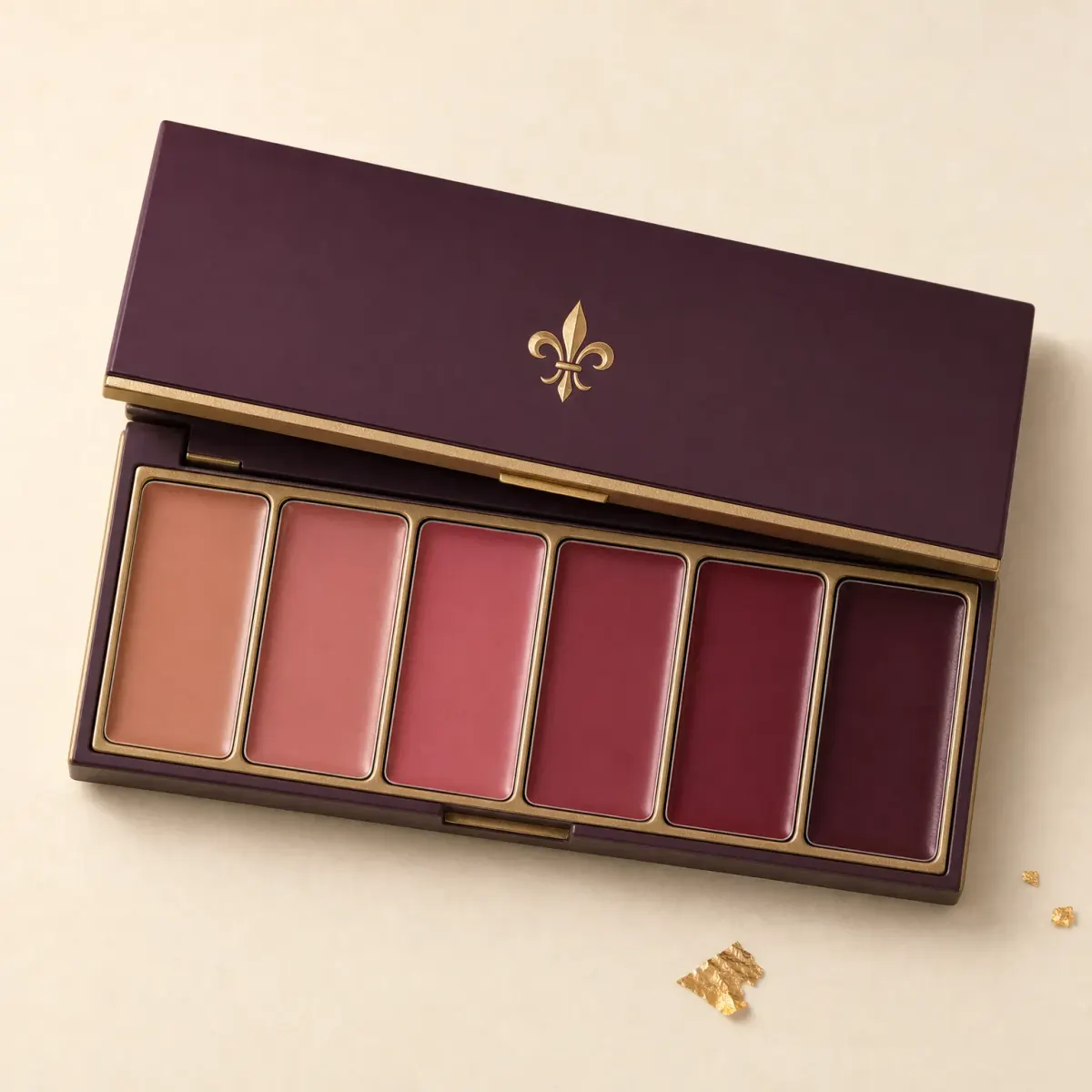
A lip palette is a flat case of cream lip colours in pans, meant to be mixed and applied with a lip brush rather than worn straight from a stick.
Our picks
Lip palettes are now made mostly for professional makeup artists, and these four are every current palette we could confirm as sold by its own maker to readers in the US. Each opens on the maker’s page, where you choose the set of shades you want.
Affiliate links — we may earn a commission at no extra cost to you. How this works
Themed shadesMid-range Graftobian
Pro Lip Color Palettes
Five shades chosen to work together — reds, pinks, cool tones or earth tones — in a formula made to hold up in front of a camera.
- 5 shades
- Long-wearing
- Five themes
Matte mixingDrugstore Crown Brush
Pro Lip Palette 6LP
Six saturated mattes made for blending and layering, the plainest way to start mixing your own shades.
- 6 shades
- Matte
Theatre rangeMid-range Mehron
L.I.P Cream Palette
Eight semi-matte shades from a theatrical house, pigmented enough to wear sheer with a fingertip or full with a brush.
- 8 colours
- Semi-matte
- Vegan
Everyday sixDrugstore Jerome Alexander
JA Basics Lipstick Palette
Six wearable shades in one small case — the everyday version of the professional palette.
- 6 shades
- Blend or layer
A lip palette holds lipstick without the stick: cream lip colour poured or pressed into shallow pans, several to a case, to be picked up with a brush. The formula is close to a bullet lipstick’s, often a little softer, because it never has to stand up on its own. What changes is the way you use it. A palette is for mixing — a deeper shade to warm a nude, a touch of a bright to lift a brown — and for placing colour exactly, which a brush does better than a bullet.
It is also the working form of lipstick for professionals. A makeup artist making up many faces in a day takes colour from a palette with a clean brush, or a disposable one, for each person, rather than putting one stick on many mouths, and mixes the shade each face needs instead of carrying hundreds of lipsticks. For anyone else, a palette is the most compact way to carry more than one colour, and an economical way to own a range of them.
Mixing a shade
Mix on the back of the hand or a clean mixing plate rather than in the pans, so the colours in the palette stay clean. Pick up a little of the base shade, add the second colour a touch at a time, and blend with small circles until there are no streaks. Lighten with a pale nude rather than white, which turns colours chalky; deepen with a brown rather than black, which greys them. Warm a shade with orange or coral; cool it with a blue-based pink or a berry.
The same few moves correct shades you already own. A red that pulls too orange on your lips is cooled with a touch of berry; a nude that makes you look washed out is warmed with a little rose. When you find a mix you like, note roughly how much of each went in: two parts to one is easier to repeat than a guess.
Applying with a brush
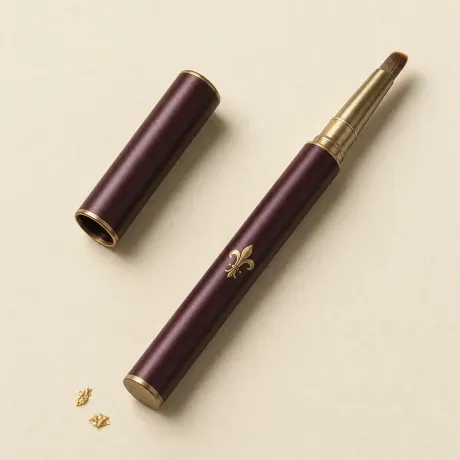
A lip brush is small, flat and fairly firm, often with a slightly tapered or rounded tip. Load it lightly and draw the outline first — the cupid’s bow, the centre of the lower lip, then out to each corner — and fill in with the flat of the brush, pressing colour into the lines of the lips. Blot with a tissue and apply a second thin layer: blotting lifts the oil and leaves the colour, so two thin coats outlast one heavy one. For a softer, stained look, press colour into the centre of the lips with a fingertip and blend outward.
Keep it clean. Wipe the brush between shades and wash it with mild soap and water regularly. If a pan has been touched by someone else’s brush or lips, scrape a thin layer off the top with a clean spatula before you use it. Closed and kept cool, out of the sun, a cream palette keeps about as well as a lipstick.
Choosing a palette
Look first at the finish. Professional palettes are usually semi-matte and long-wearing, made to be mixed and to hold up under lights; palettes sold to everyday wearers lean creamier. Then look at the range. A handful of well-chosen shades — a nude close to your own lips, a red, a berry, a brown and a pale shade to lighten with — mixes into far more colours than it holds. Check that the pans are wide enough to work a brush in, that the case closes firmly, and whether single shades can be replaced when they run out.
A palette can also be made. Slice a thin piece from each of a few favourite lipsticks with a clean spatula, press each into a pan of an empty palette, and warm it for a few seconds with a hairdryer so it settles flat. Label the pans: lipsticks look alike once they are out of their cases.
Where it came from
Putting colour on the lips with a brush is far older than the stick. In Japan, beni — red extracted from safflower — was brushed from the inside of a small porcelain cup, the beni-choko, and many women still used it that way after Western cosmetics arrived; the Museum of Beni, which is run by the beni maker Isehan-honten, dates the first Japanese stick lipstick to 1917.[1] In Europe and America, nineteenth-century lip colour was sold as tinted salves and pastes, and as liquid rouges. One argument for the stick, when it came, was that it did not spill like a liquid or leave the messy fingers of a paste.[2]
The brush came back with a technique rather than a product. After 1945, the Museum of Beni records, Japanese magazines introduced a method described as popular in the United States — draw the outline of the lips with a lip brush, fill it with colour, blot with a tissue — and it changed how Japanese women wore lip colour.[1] The paint box as a model belongs to the 1960s: Mary Quant, whose cosmetics were launched on 28 March 1966, said she had experimented with artists’ materials, water-colour paint boxes and brushes among them.[3] The lip palette as a product has no inventor we can name, and its own record is thin. It is best understood as those three habits — the cup, the brush and the paint box — brought together in one flat case.
The techniques
- Fill
- Colour inside an outline so the shape reads as solid.
- Ombré / gradient
- Deepest colour at the centre of the lips, fading toward the edges — or the reverse.
Sources
- [1]Japanese Traditional Craft: Beni for Cosmetics Google Arts & Culture.View source (opens in a new tab) Accessed 2026-09-22.
- [2]Lipsticks Cosmetics and Skin, 2009.View source (opens in a new tab) Accessed 2026-09-22.
- [3]The story of Mary Quant make-upView source (opens in a new tab) Accessed 2026-09-22.
What to apply it with
Other kinds of lipstick
Bullet lipstick
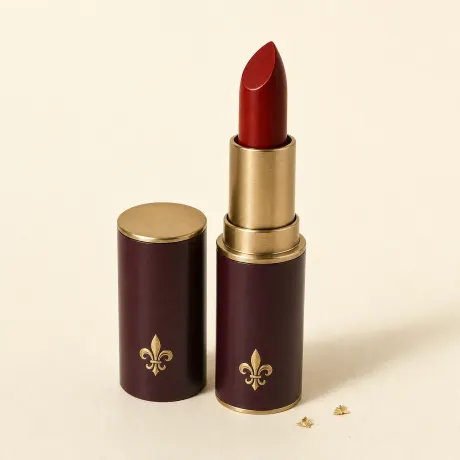
Lip colour moulded into a bullet and set in a twist-up case.
Read the guide
Liquid lipstick
An opaque fluid lipstick that dries to a long-wearing film, usually matte.
Read the guide
Beni
Red extracted from safflower and dried onto the inside of a porcelain cup; it dries an iridescent green and turns red when touched with a wet brush.
Read the guide