Lip gloss
A slow, shiny liquid for the lips, from clear shine to near-opaque colour, usually applied with a wand. What it is made of, how to choose and wear one, and what the record says about where it came from.
Lip gloss is a thick, shiny fluid for the lips, usually applied with a wand, that adds shine and anything from a sheer wash to near-opaque colour without ever drying to a set film.

Our picks
Chosen to cover the range of finish and colour — clear, sheer, shimmer and pigmented — and of budget, from drugstore to prestige, with houses from Korea, Italy and Britain beside the American and French ones. Each opens where its maker sells it, on Amazon or at the house’s own shop, and you choose your shade on that page.
As an Amazon Associate I earn from qualifying purchases. Affiliate links — we may earn a commission at no extra cost to you. How this works
High shinePrestige Pat McGrath Labs
LUST: Gloss
The makeup artist’s gloss: a deep range, from sheer washes to shimmer that reads from across a room.
- Hydrating
- High shine
Everyday nudeDrugstore NYX Professional Makeup
Butter Gloss
An inexpensive, non-sticky gloss with a creamy tint, strongest in its nudes and browns.
- Non-sticky
- Nude shades
Glass finishMid-range MAC Cosmetics
Lipglass
The professional’s standard: worn alone for shine or over lipstick and liner to change the finish.
- Glass-like shine
- Wide colour range
Cushiony shinePrestige NARS
Afterglow Lip Shine
A comfortable, cushiony gloss for anyone who finds most glosses too tacky.
- Mirror-like shine
- Up to 8h hydration
Sheer shineDrugstore Maybelline New York
Lifter Gloss
A sheer, glassy drugstore gloss that adds shine and a hint of colour without much weight.
- Hyaluronic acid
- Hydrating
ShimmerMid-range Rare Beauty
Positive Light Luminizing Lip Gloss
For shimmer rather than plain shine, which also flatters dry or uneven lips.
- Shimmer
- Glassy
Buildable colourPrestige Charlotte Tilbury
Lip Lustre
A non-sticky prestige gloss whose colour can be built from a wash to something close to lipstick.
- High shine
- Non-sticky
- Lotus extract
Budget shineDrugstore wet n wild
MegaSlicks Lip Gloss
The inexpensive way to high shine, in clear as well as tinted shades.
- Ultra-glossy
- Vitamin E
Long wearMid-range ILIA
Overglaze Hydrating Lip Gloss
A plush gel gloss made to last longer than most, and sold as resisting feathering.
- Long-wear
- 24h hydration
Oil-infusedPrestige Bobbi Brown
Crushed Oil-Infused Gloss
A tinted gloss with oils in the formula, closer to a lip oil in feel but a gloss in finish.
- Oil-infused
- Tinted
Balm-glossDrugstore L'Oréal Paris
Glow Paradise Balm-in-Gloss
For those who want a gloss to feel like a balm: tinted, soft and not tacky.
- Balm-in-gloss
- Non-sticky
Korean colourMid-range Laka
Fruity Lip Glotioner
A Korean gloss of vivid colour, applied with a soft jelly tip instead of a sponge.
- High shine
- Vivid colour
- Jelly tip
Sheer to mediumPrestige Tom Ford Beauty
Gloss Luxe
A gleaming, nearly-naked gloss from a prestige house better known for its lipsticks.
- Sheer to medium
- Jojoba and avocado oils
ScentedDrugstore COVERGIRL
Clean Fresh Yummy Gloss
A sheer, scented gloss in a generous tube, simple and inexpensive.
- Sheer
- Scented
- Vegan
Highest shineMid-range Makeup by Mario
SuperShine Lip Gloss
A makeup artist’s answer to maximum shine that still feels smooth rather than sticky.
- Glass-like finish
- Hydrating
Balm texturePrestige Laura Mercier
Lip Glacé Balm Gloss
A balm-textured gloss sold as staying inside the lip line.
- Balm gloss
- Mirror-like shine
- No feathering
Clear coatDrugstore Revlon
Super Lustrous The Gloss
A clear coat for turning any lipstick satin, or for plain shine on its own.
- Non-sticky
- Lightweight
Sheer tintMid-range Laura Geller
Color Luster Lip Gloss
Sheer, high-shine colour for those who want gloss to read as their own lips, only brighter.
- Sheer colour
- Non-sticky
Pearly shadesDrugstore KIKO Milano
3D Hydra Lip Gloss
An Italian house’s inexpensive gloss, with pearly shades among a large range.
- Hydrating
- Pearly shades
Cooling tipMid-range REFY
Lip Gloss
A non-sticky gloss with a metal tip, made to be worn over a matching liner.
- High shine
- Moisturising
- Metal applicator
Over lipstickMid-range Kylie Cosmetics
High Gloss
A glossy, comfortable finish meant to be worn alone or as a top coat.
- Non-sticky
- Multidimensional shine
Lip gloss is colour and shine carried in a slow, clear liquid rather than in wax. Where a lipstick is a stick of waxes and oils firm enough to stand up in its case, a gloss is mostly fluid: oils and esters thickened with polymers such as polybutene, which gives gloss much of its weight, its cling and its wet-looking shine. Pigment is optional. A clear gloss adds shine alone, a tinted one lays a sheer wash of colour over the lip, and the most pigmented come close to a lipstick, only wetter.
Its neighbours are close relations. A lip oil is thinner and slips rather than clings. A plumping gloss is a gloss with an added ingredient that its maker says will make the lips tingle and look fuller. A squeeze-tube gloss is the same idea in a soft tube, without the wand. What sets gloss apart is the film it leaves: it never sets, so it moves, catches the light and wears away with eating and talking, which is why it is reapplied through the day rather than relied on.
Finish and colour
Two decisions do most of the work. The first is how much colour you want. A clear gloss adds shine and nothing else, and suits every lip colour; a sheer tint warms or cools the lip without hiding it; a pigmented gloss reads almost as lipstick and needs more care at the edges. The second is the finish: a plain high shine, a shimmer or pearl that scatters the light, or glitter that sits visibly on the surface. Shimmer is the forgiving choice for dry or uneven lips, because it breaks up the reflection that a mirror shine shows in full.
Then texture. Stickiness is a trade-off rather than a fault: the tackier formulas are the ones that stay put, while the non-sticky kinds, often sold as balm-glosses or lip treatments, feel lighter and wear off sooner. The applicator matters as well. A doe-foot sponge carries more product and lays it down evenly, a brush gives a finer edge, and a metal or jelly tip feels cool and wipes clean.
How to wear it
Start with smooth lips. A thin layer of balm, blotted after a few minutes, stops gloss settling into dry patches. Lay a single stroke along the centre of the lower lip and press the lips together: the centre is where the light falls first, and gloss pushed out to the corners is the gloss that gathers and creeps. For a fuller-looking mouth, keep the shine to the middle of both lips and leave the edges bare or lined.
Over lipstick, gloss changes the finish more than the colour: a clear coat turns a matte shade satin, and a sheer tint can warm or cool it. A liner close to the gloss or to your own lip gives the crisp edge that gloss cannot hold on its own. Wipe away worn gloss before reapplying rather than layering over it, since old gloss pills and clumps. If wind and hair are a daily nuisance, the less sticky formulas are the ones to choose.
Keeping it clean
A wand travels from the lips back into the tube every time, so a gloss is best kept as a personal thing: not shared, not tried on straight from a shop tester, and wiped at the neck of the tube now and then so that residue does not build up around the stopper. Much packaging carries a small open-jar symbol with a number of months beside it, which is the maker’s guide to how long the product keeps once opened. A change in smell or texture is the moment to let it go.
Where it came from
The usual story gives lip gloss an inventor and a date: Max Factor, 1930, making the lips of actresses shine on black-and-white film, with a public launch two years later under the name X-Rated. Part of it is on the record. A history of the firm compiled from its trade literature lists Lip Gloss among Max Factor’s new products for 1930.[1] The rest is harder to stand up. That record says nothing about film, and the name is an anachronism: the X belongs to the classification system the American film industry adopted in 1968.[2] A launch under that name in 1932 is repeated widely and sourced nowhere this page could find.
In the same firm’s record, gloss comes into its own in the 1960s and 1970s, and it is aimed at the young. Max Factor sold Lip Frosting in 1965 as a “highlight and accent for lipsticks”, the job a clear gloss over lipstick still does, and in 1970 added a Pure Magic Super Lip Gloss, later joined by a Super Gloss Stick.[3] The Pure Magic range was sold from self-service floor stands and counter boutiques, “places where 16-25 year-olds were likely to shop”.[3]
Gloss has kept its place since, though it now shares the shelf with its own offshoots. Writing in 2025 about a campaign to revive one of the best-known glosses of the early 2000s, a trade reporter described the lip market as one “filled with balms, oils, tints and stains”.[4] Each of those has its own page here. The glosses below are the ones that stay closest to the original idea: a liquid, a wand and shine.
The techniques
- Fill
- Colour inside an outline so the shape reads as solid.
- Ombré / gradient
- Deepest colour at the centre of the lips, fading toward the edges — or the reverse.
Sources
- [1]Max Factor (1930-1945)View source (opens in a new tab) Accessed 2026-09-22.
- [2]PG-13: Some Material May Be Inappropriate JSTOR Daily, 21 February 2024, 2024.View source (opens in a new tab) Accessed 2026-09-25.
- [3]Max Factor (post 1960) Cosmetics and Skin, 2013.View source (opens in a new tab) Accessed 2026-09-25.
- [4]The Juicy Tubes comeback: Inside Lancôme's plan to own the lip gloss category Glossy, 23 May 2025, 2025.View source (opens in a new tab) Accessed 2026-09-25.
Other kinds of gloss, oil & tint

Squeeze-tube gloss
Gloss in a soft squeeze tube with a slanted tip, applied straight from the tube.
Read the guide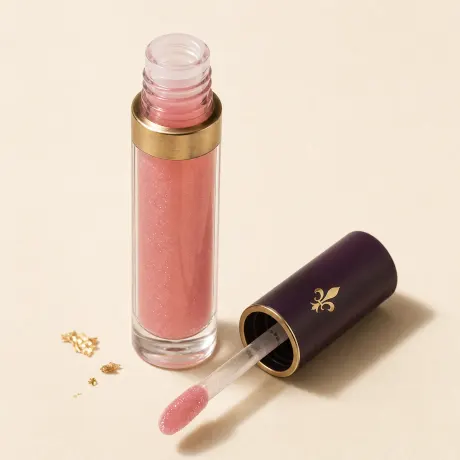
Lip plumper
A gloss with a mild irritant — often a pepper or menthol derivative — sold to make the lips look fuller for a while.
Read the guide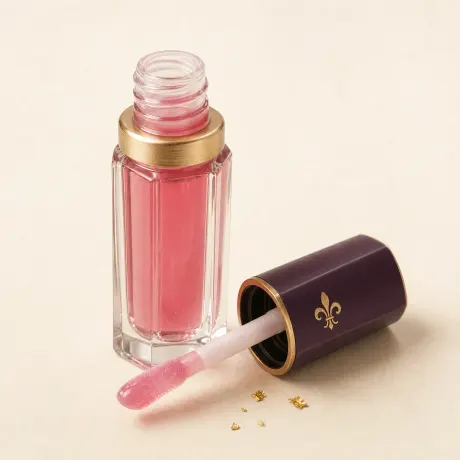
Lip oil
A tinted oil that conditions and shines without the stickiness of gloss.
Read the guide
Lip tint
A thin stain that dyes the lips, worn as a gradient deepest at the centre.
Read the guide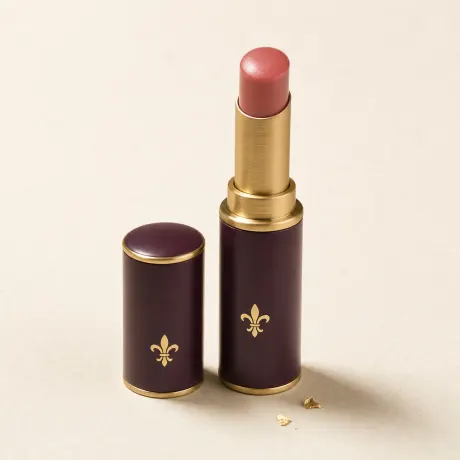
Tinted lip balm
A balm with a wash of colour, for lips that look like lips.
Read the guide