The Lip Kit: The Brand Without a Counter
Fifteen thousand lip kits, sold online, were gone in less than a minute. The company behind them had a dozen staff and no shop, and its size became one of the decade’s most argued-over numbers.
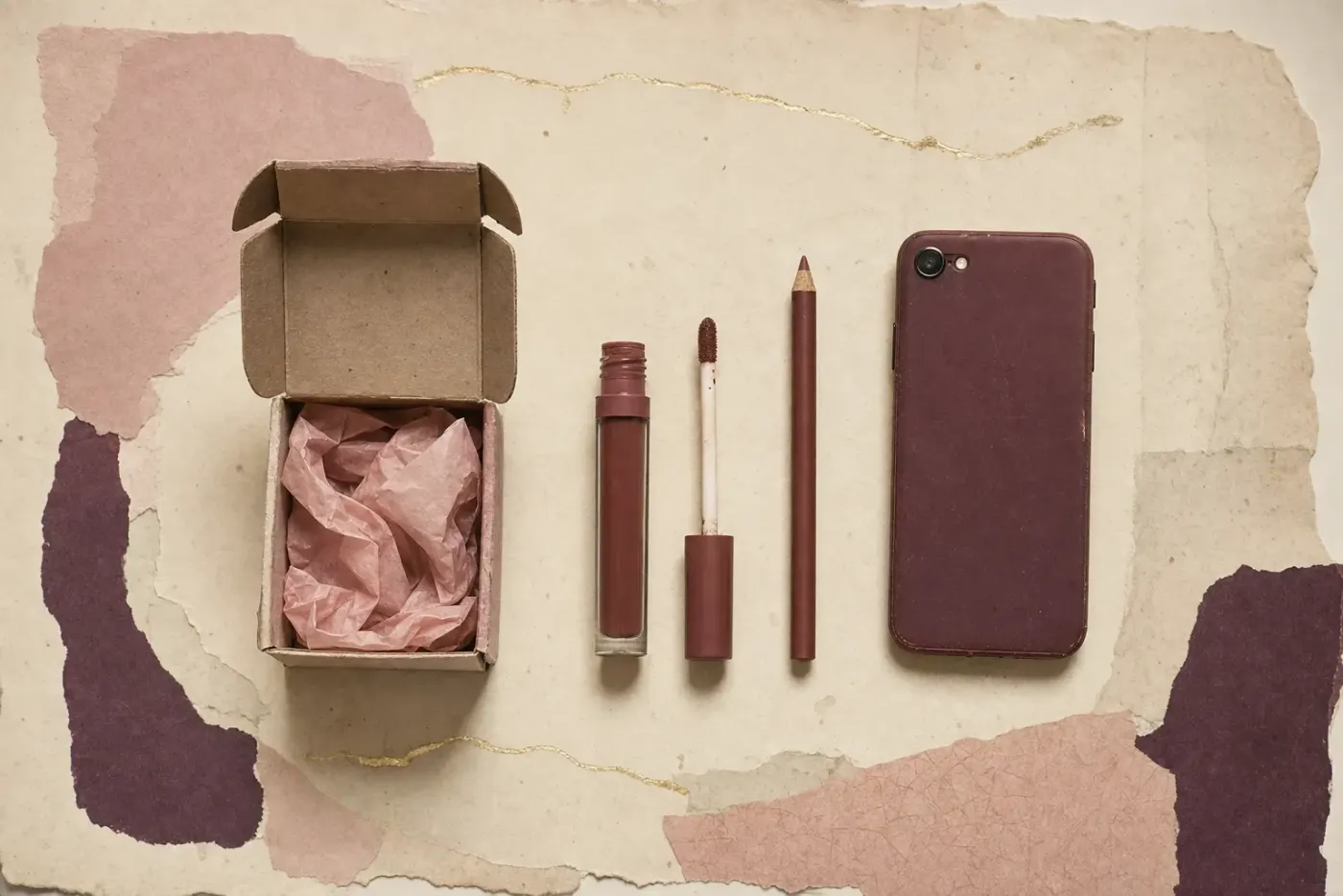
In short
Kylie Jenner’s first 15,000 Lip Kits, a liquid lipstick with a matching liner at $29, sold out online in less than a minute in November 2015; in November 2019 Coty agreed to buy 51 per cent of Kylie Cosmetics for $600 million.
- 5min read
- 5chapters
- 7sources
In November 2015 a first batch of 15,000 lip kits went on sale online, each a lip liner and a matching lipstick, at $29. They were gone in less than a minute. “Before I even refreshed the page,” their owner later told Forbes, “everything was sold out.”[1]
The kits had no counter, no shop and almost no advertising in the old sense. What they had was an audience, and the decade was learning how far an audience could carry a makeup brand.
The Feed Before the Brand
The Lip Kit was not the first brand to grow out of a following. Huda Kattan left a job in finance to become a makeup artist, launched a website of tutorials in 2010 and founded Huda Beauty in 2013, beginning with a line of false eyelashes made with her sisters; by 2018 Forbes valued the company at upwards of $1 billion.[2] Emily Weiss started the blog Into the Gloss in 2010 and launched Glossier from it four years later.[3] Glossier’s first products, in October 2014, included a sheer Perfecting Skin Tint, sold under the line “Skin first, makeup second, smile always.”[4]
Each began with readers and turned them into customers. Weiss told CNN in 2017 that she had realised she could use social media to talk to customers directly; Kattan called Instagram “the catalyst that changed everything”.[3][2]
A Company of Twelve
Kylie Cosmetics was started in 2015, and its economics were the point. Early in 2019 it had seven full-time and five part-time employees. Manufacturing and packaging were outsourced to Seed Beauty, a private-label producer in Oxnard, California; sales and fulfilment were handled by Shopify; and marketing was done mostly through social media, where its founder announced launches and shades to more than 175 million followers across four platforms.[5]
The same manufacturer made the products of her sister Kim Kardashian West’s line, launched in June 2017 with a contour and highlighting kit.[6] The celebrity brand had become a kit in its own right: a famous name, a contract manufacturer, an e-commerce platform and a following.
It’s the power of social media. I had such a strong reach before I was able to start anything.
Into the Shops
A brand without a shop eventually wanted one. In November 2018, after three years of selling online and in pop-up shops, Kylie Cosmetics went into Ulta’s more than one thousand stores, and in the following six weeks, by Oppenheimer’s estimate, sold $54.5 million of products there. Ulta, Forbes reported, had not spent a dime on traditional marketing to launch it — “unheard of”, said its senior vice president of merchandising.[8]
The route was a familiar one by then. IT Cosmetics, founded in 2010, had gone into Ulta in 2012 and was bought by L’Oréal for $1.2 billion in 2016.[8] Over the decade the specialty stores gained ground on the department stores: by Euromonitor’s figures, as Fortune reported them, the specialty stores’ share of beauty sales rose from 15 to 21 per cent between 2008 and 2018, while the department stores’ fell from 22 to 16.5. In October 2019 Shiseido paid $845 million for Drunk Elephant, launched in 2012.[9]
The Numbers
How big the business was became a story of its own. In March 2019 Forbes estimated its 2018 revenue at $360 million and called its founder, at twenty-one, the youngest self-made billionaire ever.[10] In November 2019 Coty agreed to buy 51 per cent of Kylie Cosmetics for $600 million, valuing it at about $1.2 billion.[11]
Coty’s own presentation then put the brand’s revenue over the twelve months before the deal at $177 million, and implied about $125 million for 2018.[11] In May 2020 Forbes concluded that the business had been significantly smaller and less profitable than the family had led the industry and the press to believe, and that its founder was not, after all, a billionaire. Representatives of Kylie and Kris Jenner wrote to the magazine that the accusations of falsified tax returns and misstated revenues were “absolutely false”.[11]
What Is Not Known
The true size of Kylie Cosmetics in its first years is not settled by anything cited here. The higher figures — $420 million in retail sales in eighteen months, published in the trade press in 2017 — came from the family; the lower ones are Forbes’s inference from Coty’s filings, and Forbes itself said that it could not prove the tax returns it had been shown were fake.[12] Either the business shrank by more than half between 2016 and 2018, or it was never as large as reported; the analysts Forbes consulted thought the second more likely, and the Jenners denied it.[12]
Nor do the sources measure how much of the Lip Kit’s appeal was the product and how much the name. They do not say whether its formula differed from the matte liquid lipsticks already on sale, and this account does not claim that it was the first.
Sources
- [1, 11, 12]Inside Kylie Jenner’s Web Of Lies—And Why She’s No Longer A Billionaire Forbes, 2020.View source (opens in a new tab) Accessed 2026-10-03.
- [2]Huda Kattan: The face that launched a billion-dollar beauty empire CNN, 2018.View source (opens in a new tab) Accessed 2026-10-03.
- [3]Glossier started as a beauty blog and is now valued at $1 billion CNN Business, 2019.View source (opens in a new tab) Accessed 2026-10-03.
- [4]How Glossier Made Effortlessness a Billion-Dollar Brand The New Yorker, 2023.View source (opens in a new tab) Accessed 2026-09-25.
- [5, 7, 8, 10]At 21, Kylie Jenner Becomes The Youngest Self-Made Billionaire Ever Forbes, 2019.View source (opens in a new tab) Accessed 2026-10-03.
- [6]The Sales Projections for Kim Kardashian’s New Makeup Line Are Crazy Fortune, 2017.View source (opens in a new tab) Accessed 2026-10-03.
- [9]The Decade Beauty Retail Stepped Out From Behind the Counter Fortune, 2019.View source (opens in a new tab) Accessed 2026-10-03.
Filed under