Greasepaint
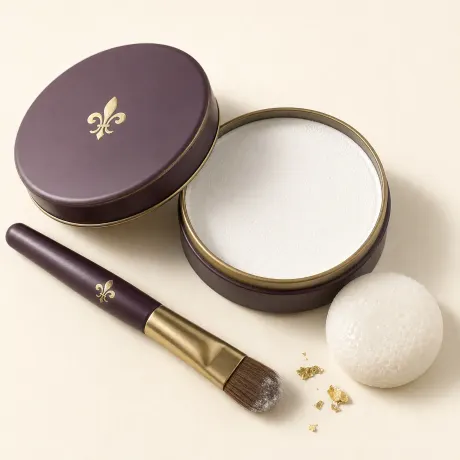
The actor’s base: colour ground into grease and wax, opaque enough to read from the back of a theatre. What it is, how to choose between pot, palette and prosthetic grease, how to put it on and take it off — and how it reached the stage.
Greasepaint is opaque stage makeup made of pigment ground into a water-free base of oils, fats and waxes, applied in thin layers, set with powder and removed with cream or oil.
Our picks
Few houses still make greasepaint, and these are the ones whose products we could check at the maker’s own US shop: Mehron, Graftobian and Kryolan, across the jobs greasepaint does — base colours, clown whites, character palettes and grease for prosthetics. Kryolan’s US shop asks every new visitor to accept its cookies before it shows the product. Coverage and wear claims are the makers’.
Affiliate links — we may earn a commission at no extra cost to you. How this works
Classic baseMid-range Mehron
Foundation Greasepaint
The one its maker still calls greasepaint: petrolatum and wax loaded with colour, in a pro-size pot.
- Face and body
- Pro-size pot
- Long wear
High pigmentMid-range Kryolan
Supracolor
Sold as a cream foundation but made the greasepaint way — pigment, wax and oil, no water — in skin tones and vivid colours.
- Up to 44% pigment
- Waxes and oils
- Skin tones and brights
Stage creamMid-range Graftobian
Theatrical Creme Foundation
A theatrical cream with more pigment than the house’s HD foundations, for school plays and character work alike.
- 37 shades
- Opaque
- Water-free base
Clown whiteMid-range Mehron
Clown White
The professional clown’s and mime’s white, warmed in the palm and patted on to avoid streaks.
- Ultra-opaque
- Matte
- Titanium dioxide
Ageing wheelMid-range Graftobian
Old Age Makeup Wheel
An ageing base, three shadow colours and a highlight in one wheel: the stage method of building age from several colours, ready-matched.
- Five cremes
- Instructions included
ProstheticsMid-range Kryolan
Rubber Mask Grease
For painting latex noses, chins and bald caps so they match the skin around them.
- Grease-based
- For latex pieces
- Set with powder
Quick characterMid-range Mehron
Tri-Color Character Makeup Palette
Three matched greasepaints for one character — a bruise, a skeleton, a witch — for a single night’s makeup.
- Three shades
- Greasepaint
- Applicator included
Crease-resistant whiteMid-range Graftobian
Clown White Cream
A clown white on its own base, sold as not cracking or creasing around the mouth.
- Dense white
- Three sizes
- Clown base
Supple whiteMid-range Kryolan
Supracolor Clown White
Kryolan’s clown white, made more supple than its standard Supracolor, for theatre and carnival faces.
- Theatre and carnival
- Supple texture
Castor-oil RMGMid-range Graftobian
Rubber Mask Grease Paint
Rubber mask grease in single colours, sold as keeping appliances from the chalky look ordinary cream gives them.
- Castor oil
- Latex and foam
- Single colours
Greasepaint is colour ground into grease. Make a cream without water, load it with pigment and bind it with oils, waxes and petroleum jelly, and you have the actor’s base: opaque enough to read from the back of a theatre, slow enough to blend into shadows and highlights, and indifferent to the sweat of hot lights. Mehron’s Foundation Greasepaint lists petrolatum, mineral oil and ozokerite wax ahead of its kaolin and pigments. Because nothing in it evaporates, greasepaint never sets by itself: it is fixed with powder, and it comes off only with an oil, a cleansing cream or a makeup remover.
That is what separates it from its neighbours. A cream foundation for everyday wear usually contains water and is made to look like skin at conversational distance; water-activated face paint dries to a matte film and washes off with soap. Greasepaint is heavier and more heavily pigmented than either, and today it is sold in pots, palettes and wheels as well as sticks, often under the name of crème or cream makeup rather than the old one.
Pot, palette or prosthetic grease
Choose by the job. For a whole face or body in one colour — a base, a green witch, a clown’s white — a pot is easiest to work from; clown whites are simply greasepaints made with extra titanium dioxide for an unbroken white. For a character, a palette or wheel puts a ground colour, its shadow and its highlight side by side, which is how stage faces are built: from several colours, not one. A stick or crayon draws lines, and is the shape greasepaint was first sold in.
Rubber mask grease is the specialist. It is greasepaint on a castor-oil base for latex and foam prosthetics — noses, chins, bald caps — which its makers sell as colouring an appliance without the chalky look an ordinary cream leaves on it. Pigment load varies from house to house: Kryolan puts Supracolor’s at up to 44 per cent, and Graftobian says its theatrical cremes carry 30 per cent more pigment than its HD foundations. The heavier the load, the thinner the layer that will cover.
Putting it on and taking it off
Start on clean skin with a thin barrier, a light moisturiser or a primer, which keeps colour out of the pores and makes removal easier. Warm a little greasepaint on the back of the hand or a palette and apply it thinly with a sponge, a brush or the fingertips, patting rather than stroking so that it does not streak. Lay the ground colour first, then shadows and highlights, and blend their edges before setting. Then powder generously: press a translucent or setting powder on with a puff, leave it a minute, and brush away the excess. Powder is what stops greasepaint shining and sliding; a setting spray can go over it.
For hygiene, scrape what you need onto a palette with a spatula rather than working from the pot, and never share a sponge. Keep red, orange and yellow away from the eyes and blue and green off the lips unless the label says otherwise: in the United States theatrical makeup is regulated as a cosmetic, and a colour additive may be used near the eye only if its listing allows it.[1] To remove it, soften the paint with cold cream, an oil or a makeup remover, wipe it away, then wash with soap and water.
Where it came from
Greasepaint began as a remedy for light. By the 1840s most Western stages were lit by gas, whose glare washed the colour out of the old powder make-up, and actors began mixing pigment into grease: Herman Vezin “mixed a lot of colour with melted tallow” in Philadelphia in 1857. Its ancestry was humbler still. Stick pomatums of lard or suet and wax, poured into moulds of paper or tin foil, had long been sold coloured to hide grey hair, and the historian James Bennett traces the stick greasepaint that the opera singer Ludwig Leichner began making commercially in Berlin in 1873 to that tradition.[2]
By 1899 a guide to going on the stage could report that “chemists almost everywhere now deal in grease paints”.[2] Leichner’s own sticks were round, and by 1903 his firm offered nearly eighty colours, some developed for the new electric light. It sold them as free of lead, after well-reported deaths of performers whose make-up had contained white or red lead; the story that Leichner was a trained chemist is, on Bennett’s reading, contentious.[3]
The First World War left German greasepaint unwelcome in Britain, and in 1922 the London trade paper The Stage was still refusing Leichner’s advertisements. The cinema made its own demands: for early film stock the firm recommended bright yellow, green and violet greasepaints, Fritz Lang used Leichner make-up for Die Nibelungen, released in 1924, and by 1925 Leichner was selling cream greasepaint in tubes, matching the Supreme Greasepaint that Max Factor had released in 1923.[4]
Greasepaint also left the theatre. For many women it was a first taste of make-up, met in amateur theatricals and photographers’ studios, and some wore it off the stage: the actress Estelle Winwood remembered painting her lips in New York in 1916 with Leichner’s No. 2, which “was considered very terrible for wearing it offstage”.[2] Leichner’s London company was sold in 1966 and appears to have been abandoned by the early 1990s.[5] The recipe outlived it: pigment, oil, wax and petrolatum, in the pots and wheels the stage houses sell today.
The techniques
- Sweep
- Long, light strokes that deposit a veil of product.
- Pat
- Tap lightly with a fingertip or damp sponge so product melts in rather than moves.
Sources
- [1]Color Additives and Cosmetics: Fact Sheet U.S. Food and Drug Administration, 2022.View source (opens in a new tab) Accessed 2026-09-26.
- [2]Greasepaint Cosmetics and Skin, 2010.View source (opens in a new tab) Accessed 2026-09-25.
- [3]Leichner Cosmetics and Skin, 2020.View source (opens in a new tab) Accessed 2026-09-26.
- [4]Leichner (1910-1945) Cosmetics and Skin, 2020.View source (opens in a new tab) Accessed 2026-09-26.
- [5]Leichner (post 1945) Cosmetics and Skin, 2020.View source (opens in a new tab) Accessed 2026-09-26.