Colour-correcting primer
A primer tinted green, lavender or peach to take the edge off a cast in the skin before foundation goes on. How it differs from a corrector and a CC cream, which tint to choose and how to wear one, and a green face powder sold in Japan in 1917.
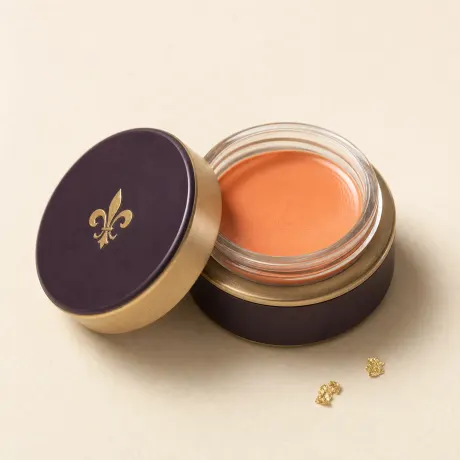
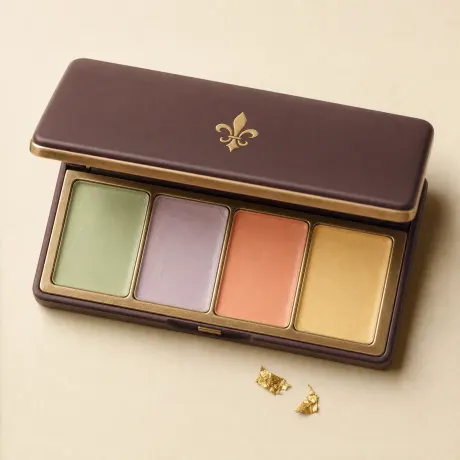
A colour-correcting primer is a sheer primer tinted to offset a cast in the skin — green against redness, lavender against sallowness, peach or pink against dullness — smoothed on thinly before foundation.

Our picks
Chosen to cover the correcting colours on sale, mostly green for redness, with lavender and tone-evening formulas beside them, and the budgets, from drugstore to prestige. Each opens where its maker sells it, on Amazon or at the house’s own shop. A tint shows differently on every skin, so judge one in daylight.
As an Amazon Associate I earn from qualifying purchases. Affiliate links — we may earn a commission at no extra cost to you. How this works
With SPFPrestige Clinique
Redness Solutions Daily Protective Base Broad Spectrum SPF 15
A tinted daily base with a mineral sunscreen, for skin that is red most of the time.
- Sheer green tint
- SPF 15
- Oil-free
Budget greenDrugstore e.l.f. Cosmetics
Tone Adjusting Face Primer
The simplest way to try a green primer, at a drugstore budget.
- Green tint
- Neutralises redness
Green, soothingMid-range Smashbox
Photo Finish Correct Anti-Redness Primer
A green primer the maker also suggests for the neck and chest, where a flush shows.
- Green-toned
- Anti-redness
- Alone or under make-up
Redness eraserDrugstore L'Oréal Paris
Prime Lab Up to 24H Redness Eraser
A drugstore green primer sold on long wear as well as correction.
- Green
- Niacinamide
- Up to 24h wear
Serum primerPrestige Givenchy Beauty
Prisme Libre Skin & Color Serum Primer
Inspired, the house says, by the colours of its Prisme Libre loose powder; green is one of several shades.
- Green
- Serum primer
- Blurring
Blur and correctDrugstore Maybelline New York
Facestudio Master Prime Blur + Redness Control
Blurs and corrects in one step: the green member of a primer range sorted by colour.
- Green
- Blurring
- Redness control
Mineral greenMid-range bareMinerals
PRIME TIME Redness Reducing Primer
Sheer enough to wear over the whole face, with its green from mineral pigments.
- Green mineral pigments
- Gel-lotion
- Chamomile
CalmingDrugstore COVERGIRL
TruBlend Skin Enhancer Primer, Cashmere Calm
The calming green variant of a primer range sold in four textures.
- Colour-corrects redness
- Centella
- Cushiony
Hydrating greenPrestige Clarins
SOS Color Correcting + Hydrating Face Primer
A green primer with hydration built in, for redness on drier skin.
- Green
- Conceals redness
- 24h hydration
LavenderDrugstore e.l.f. Cosmetics
Brightening Lavender Face Primer
Lavender rather than green, for skin that looks sallow or dull more than red.
- Lavender
- Brightening
- Uneven tone
Green to beigeMid-range Merle Norman
Red Correct Treatment Primer
Goes on green and blends to beige, so it can be worn alone on a bare day.
- Green to beige
- Anti-redness
- Alone or under make-up
Italian greenDrugstore KIKO Milano
Skin Tone Face Base
An Italian drugstore base whose green is sold as disappearing on the skin.
- Green tint
- Natural finish
- Invisible coverage
Glassy greenDrugstore wet n wild
Prime Focus Glass Correct Primer, Green
A green corrector with a glassy, dewy finish rather than a matte one.
- Green
- Glass-like finish
- Corrects redness
Uneven toneDrugstore Physicians Formula
Mineral Wear Diamond Perfector Color-Correcting Primer
Sold for uneven tone in general rather than redness alone, with diamond powder in the formula.
- Gel-to-serum
- Uneven tone
- Talc-free
A colour-correcting primer is a primer with a tint in it. The base is the same silicone or water gel as any other primer; what changes is a small load of pigment, chosen to work against a particular cast in the skin. Green is sold against redness, lavender or violet against a sallow, yellowish tone, and peach, apricot or pink against dullness and grey. Smoothed on thinly, the tint mixes with the skin’s own colour and takes the edge off the cast, so that the foundation on top has less to cover.
It sits between two other products, and it is easy to reach for one when you mean another. A colour corrector is a dense cream or stick laid on a particular mark, a red blemish or a dark circle, and concealed over; a colour-correcting primer is sheer, worn across whole areas of the face, and should almost disappear as you blend. A CC cream is a base in its own right, often worn with nothing on top. The primer is meant to be covered.
Choosing a tint
Look at your bare face in daylight and name the problem before you choose the colour. Redness that sits across the cheeks and around the nose, or that flushes and fades, is what green primers are made for. A face that looks yellowish or tired, especially under artificial light, is what lavender is sold for, and it brightens fair and light skin most. Peach and apricot are for skin that looks flat or greyish, particularly medium and deep skin, where a pale tint would sit on top as a film; pink is sold to fair skin for the same reason.
Most people need only one, and many need it on only part of the face. Choose the sheerest version that does the job. A strongly pigmented green worn all over cancels redness where you have it and turns the rest of the face grey where you do not.
How to wear it
Apply it after skincare and before foundation, in a thin layer: a pea-sized amount does a whole face, and less does the areas that need it. Smooth it outward from the reddest or dullest place, feather the edges, and let it set for a minute until it no longer feels wet. Then check it in a mirror by a window. The tint should have almost vanished, leaving the skin a little more even; if you can still see green or lavender, blend further or take some off.
Put foundation on by pressing rather than rubbing, so that the primer stays where you placed it. Because the tint does some of the evening out, a lighter foundation, or a thinner layer of your usual one, is often enough. Strong local redness, a blemish or a broken vein, still needs a corrector or a concealer over the primer: the primer is for the general cast, not the single mark. Some are sold for wearing alone, going on green and blending to beige; on a day without foundation, that is the lightest correction there is.
What it will not do
A colour-correcting primer evens a cast; it does not cover. On its own it leaves the skin a shade more even and still visibly itself, which is why it is almost always worn under something. Nor does it change the skin beneath it. Redness that comes and goes with heat, exercise or a glass of wine will come and go under the primer too, and the primer only softens how it looks.
Tints also behave differently on different skin. Green, the strongest of the correcting colours, can look ashy on medium and deep skin even when it is well blended, and for dullness or uneven patches on deeper skin, peach and orange tints are the usual choice. Test a colour-correcting primer the way you would test a foundation: on the jaw, in daylight, with your usual base pressed on top, because that is how it will be seen.
Where it came from
Colour chosen to change how the skin looks, rather than to match it, has an early chapter in Japan. In 1917 Shiseido sold a face powder in seven colours, white, yellow, flesh-yellow, green, rose, peony and purple, at a time when white powder was the norm, and buyers chose among them by their own colouring and the occasion. According to the company’s heritage staff, citing historical records, the green and the purple were favoured by the geisha of Shinbashi, because they looked well under electric light.[1]
In Western base make-up, green long stayed a specialist’s colour. A trade article on foundation formulas noted in 2013 that small amounts of chromium oxide green are used “only in special cases, e.g., camouflage products”.[2] Yet chromium oxide greens are the colouring in several of the primers below, and they are permitted in cosmetics applied to the skin in the United States, the area around the eyes included, under a rule published in July 1977.[3] The colour-correcting primer puts that specialist’s green into an everyday step.
In Japan the tinted base never went away. Shiseido’s make-up artists still name bases tinted to even out the skin’s colour as one type of keshō shitaji, the make-up base, beside bases that control texture and oil.[4] When the first colour-correcting primer reached a Western counter is not well recorded. The principle, one colour laid down to change what shows through another, is the old one.
The techniques
- Pat
- Tap lightly with a fingertip or damp sponge so product melts in rather than moves.
- Sweep
- Long, light strokes that deposit a veil of product.
Sources
- [1]大正時代にあった「七色粉白粉」ってどんなもの? (What was the “seven-colour powder” of the Taishō era?) Shiseido, Foundation 100 Questions and 100 Answers.View source (opens in a new tab) Accessed 2026-09-26.
- [2]Color Foundation and Base Formulas Deciphered Cosmetics & Toiletries, 2013.View source (opens in a new tab) Accessed 2026-09-22.
- [3]21 CFR 73.2327 - Chromium oxide greens United States Government Publishing Office, electronic Code of Federal Regulations, 2026.View source (opens in a new tab) Accessed 2026-09-26.
- [4]「下地」と「ファンデ」はどう違うの? (How do make-up base and foundation differ?) Shiseido, Foundation 100 Questions and 100 Answers.View source (opens in a new tab) Accessed 2026-09-26.