Blotting papers
Thin sheets that lift oil from the skin without moving the makeup over it. What they are made of, how to use one properly — and how a by-product of gold-beating became a Kyoto shop’s signature.
Blotting papers are thin, absorbent sheets — of paper, plant fibre or plastic film, sometimes coated with powder — pressed against shiny skin to lift oil without disturbing the makeup over it.

Our picks
Few makers now sell blotting papers to US readers themselves, and these four are the ones we could confirm on sale from their makers: Japanese abaca and hemp papers, a powder-coated rice paper and a scented sheet, across budgets. Each opens at the maker’s own shop.
Affiliate links — we may earn a commission at no extra cost to you. How this works
Abaca and goldPrestige Tatcha
Aburatorigami Japanese Blotting Papers
Abaca-leaf papers flecked with gold, the gift-box version of the Japanese tradition, and free of powder and fragrance.
- Abaca leaf
- Gold leaf
- Powder-free
Blot and powderDrugstore Palladio
Rice Paper Oil Blotting Sheets
One side blots and the other lays down a little rice powder, so a single sheet does both jobs at the end of a long day.
- Dual-sided
- Rice powder
- Three tints
Japanese hempMid-range DHC
Blotting Paper
Plain hemp paper made by Japanese papermaking methods, with nothing on it to leave behind.
- Natural hemp
- Powder-free
- 100 sheets
Rose-scentedDrugstore Winky Lux
Rose Tea Blotting Sheets
An inexpensive sheet infused with rose extract, for anyone who likes a little scent with the blot.
- Rose extract
- Mattifying
Blotting papers are thin sheets that lift oil from the surface of the skin and leave the makeup over it where it is. Pressed against a shiny forehead or nose for a second or two, a sheet draws the oil into itself and comes away with it; the foundation and powder underneath stay put, because nothing has been rubbed. They come in small booklets, pouches and dispensers, made to be carried.
The materials vary. The Japanese kind, aburatorigami, is a fine paper traditionally beaten thin, and is now often made of abaca or hemp fibre; others are rice paper, linen or thin plastic film, and some are coated on one side with a light powder, so that one sheet blots and touches up at once. What sets them apart from their neighbours is that they take away rather than add. A pressed powder absorbs oil too, but leaves a layer that builds with every touch-up, and a mattifying primer works underneath the makeup rather than on top of it.
Who needs them
Blotting papers earn their place on skin that shines by midday, which usually means oily or combination skin, and on hot or humid days for almost everyone. They suit people who wear little or no powder, and anyone whose base looks heavy after a second or third powder touch-up, because a sheet adds nothing to the face. Dry skin rarely needs them. Nor are they only for made-up faces: on bare skin a sheet takes down shine without adding anything that could show. A booklet is also the one touch-up tool that works over every kind of base, from a full-coverage foundation to a sheer skin tint.
Plain, powdered or scented
Choose by what you want left behind. Plain paper and fibre sheets take the oil and leave nothing, which makes them the choice over a finished face you do not want to change, and over sheer bases, where extra powder would show. Powder-coated sheets blot and set in one movement, useful at the end of a long day; choose a tint close to your skin, because a pale powder shows on deep skin. Scented or infused sheets add a fragrance or a plant extract, which is worth knowing if your skin reacts to fragrance. Thicker sheets, of linen or heavier fibre, can be used on more than one place before they are spent.
Look at the packaging too. A booklet with a cover keeps the sheets clean in a bag; a pouch or dispenser lets you pull one out without touching the rest.
How to blot
Blot before you powder, not after. Take one sheet, lay it flat against the shiny area, press gently with a fingertip for a second or two, and lift it straight off. Do not wipe or drag, which moves foundation and concealer along with the oil. Work from the places that shine first — the sides of the nose, the centre of the forehead, the chin — and use a clean part of the sheet, or a fresh sheet, for each; once a sheet has turned see-through with oil, it has done its work. If the face still looks shiny once the oil is off, a light press of powder can follow; if it looks matte, stop there.
Blotting works on oil rather than sweat. On a hot day, pat the skin dry with a tissue first, then blot. Keep the booklet closed between uses, since a sheet that has picked up dust or makeup from the bottom of a bag will leave it on your face.
Where it came from
The oil-blotting paper most people know is Japanese, and its story runs through the gold-leaf workshops of Kanazawa. Gold is beaten into leaf between sheets of a special washi, hakuuchi-gami, which lets the metal thin without sticking.[1] According to the Kanazawa gold-leaf maker Hakuichi, paper beaten for years grows extremely thin and fine, and its knack for taking up skin oil was long known: spent sheets, called furuya-gami, were prized by a small circle, the geiko of Kyoto chief among them. Hakuichi also says that its founder, Kuniko Asano, was the first in the trade to sell blotting paper made by the gold-beating method as a product in its own right, beating the paper for blotting from the start rather than waiting for a by-product, and that it has since shipped more than 200 million booklets.[2]
The firmest dates belong to a Kyoto shop. Yojiya says it began in 1904 as Kunieda Shōten, a dealer in stage make-up, rouge and white powder among it, and that in 1921, after people in the film business asked for its help, it devised the aburatorigami that became its signature product; its own history credits a television drama with a boom in its blotting papers in the 1990s.[3]
These are companies’ accounts of themselves, and none of the sources read here puts a date on the older story of geiko and the gold-beaters’ paper. It is plausible and widely told, and for now it is a story rather than a record. What the paper does has not changed: it takes oil away and adds nothing, which is why a booklet still sits in a handbag beside the powder rather than in place of it.
The techniques
- Blot
- Press against tissue or blotting paper to lift excess oil or product.
- Press
- Press product onto the skin without dragging, so it stays where it is put.
Sources
- [1]Leafing through Kanazawa’s golden legacy Japan Today, 24 July 2023, 2023.View source (opens in a new tab) Accessed 2026-09-26.
- [2]日本初、金箔打紙製法のあぶらとり紙の誕生秘話 (The story of Japan's first blotting paper made by the gold-leaf beating-paper method) Hakuichi Co., Ltd., Kanazawa (company website).View source (opens in a new tab) Accessed 2026-09-26.
- [3]よーじやグループの歴史 (History of the Yojiya Group) Yojiya, Kyoto (company website).View source (opens in a new tab) Accessed 2026-09-26.
Other kinds of setting & finishing
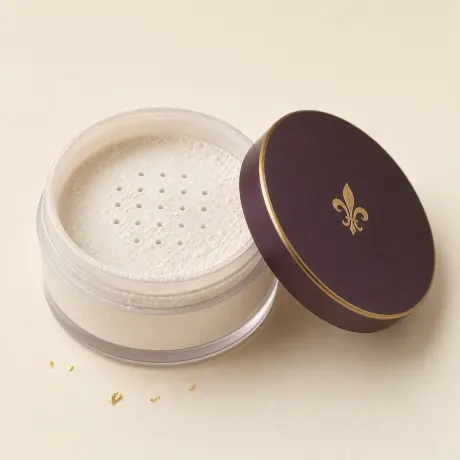
Loose setting powder
A fine loose powder that sets the base, takes down shine and holds everything beneath it in place.
Read the guide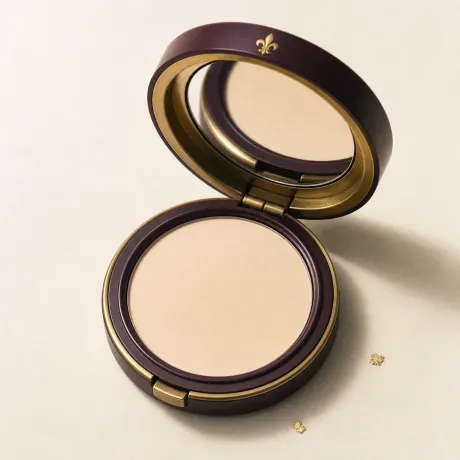
Pressed powder
Setting powder pressed into a compact, for touching up away from the mirror.
Read the guide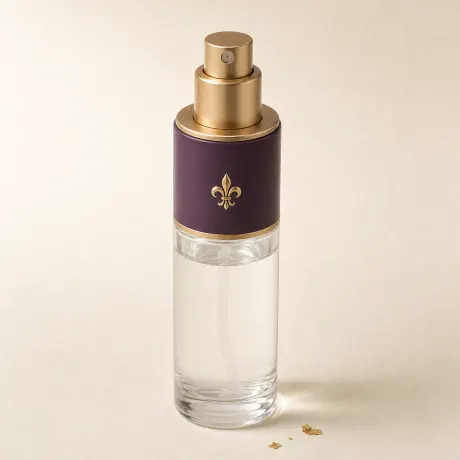
Setting spray
A fine mist that melts powder into skin and fixes the finished face for longer wear.
Read the guide