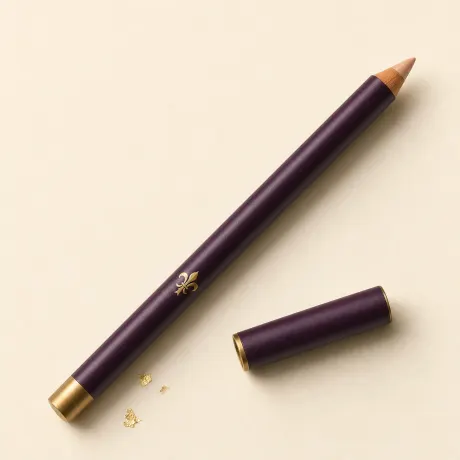
Aegyo-sal pencil
A dual-ended pencil for the small roll beneath the lower lashes that Koreans call aegyo-sal: light on the roll, a soft shadow below it. What the feature is and what its name means, how to draw it — and how a Korean ideal became a product.
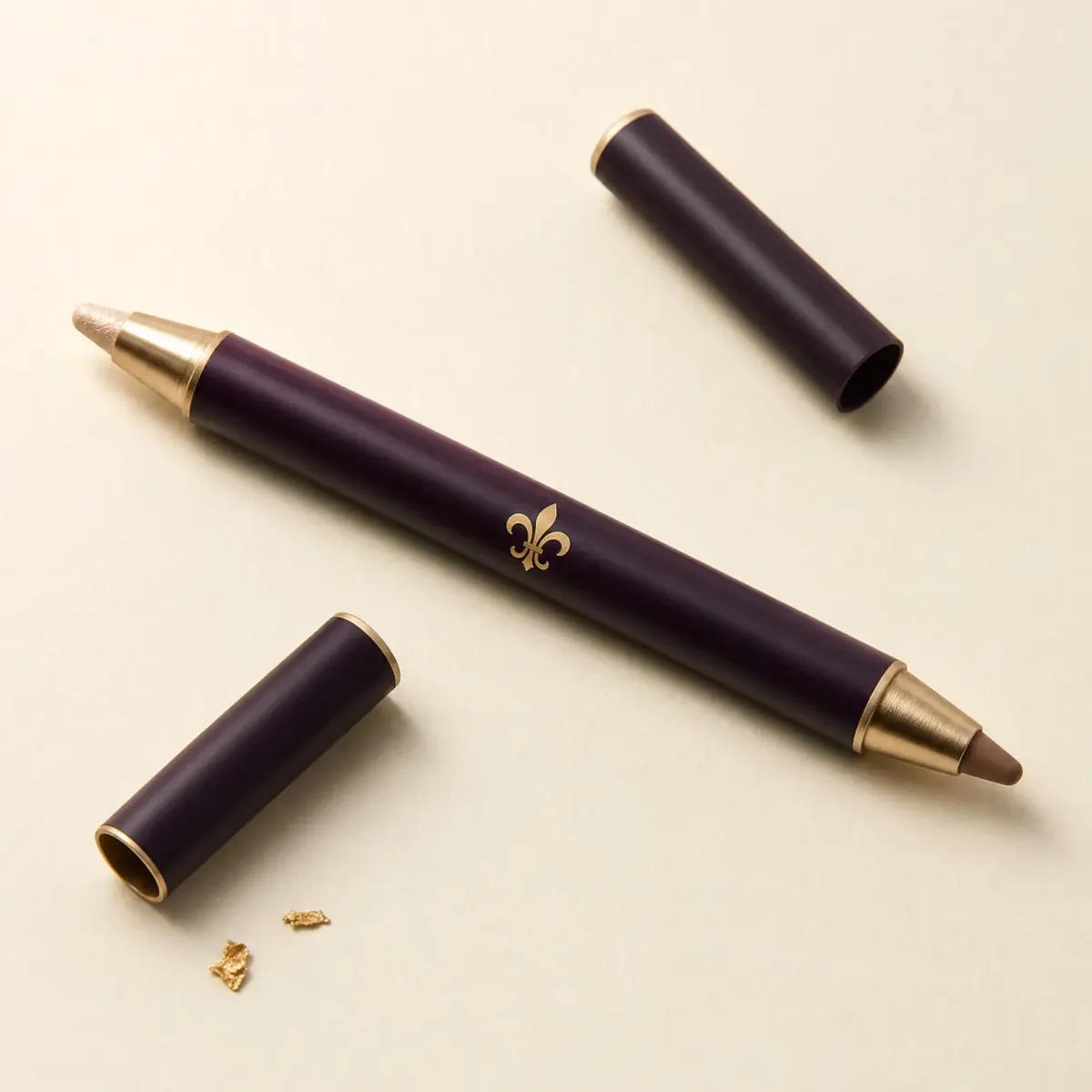
An aegyo-sal pencil is a dual-ended eye pencil or stick for the aegyo-sal, the small roll of fullness just beneath the lower lashes that shows when a person smiles: a pale, often shimmering end brightens the roll and a soft matte end draws a faint shadow beneath it.
Our picks
The pencils made for aegyo-sal come from Korean, Chinese and online makeup brands rather than prestige houses; these seven are sold to US readers by their makers. Each opens at the house’s own store on Amazon, where you choose your shade.
As an Amazon Associate I earn from qualifying purchases. Affiliate links — we may earn a commission at no extra cost to you. How this works
Highlight and contourDrugstore colorgram
Under Eye Highlighter Stick
A retractable stick for both halves of the look: light on the roll and a contour beneath it.
- Retractable
- Highlight and contour
- Smudge-proof claim
Shimmer onlyMid-range AMUSE
Under-eye Volume Pencil
A single-ended shimmer pencil for the roll itself, for anyone who would rather draw the shadow with something else, or leave it out.
- 5.5 mm pencil
- Clear shimmer
- No sharpener needed
Round and flat tipsDrugstore lilybyred
Smiley Aegyosal Eyeliner
A round tip for the light and a flat one for the shadow, in muted tones chosen not to look red.
- Dual-ended
- 3 mm round tip
- 2 mm flat tip
Pearl and matteDrugstore 2aN
Color Play Dual Liner
A pearl end and a matte shading end in one pencil: a neutral pink over a muted, un-red brown.
- Dual-ended
- Pearl and matte
- Smudge-proof claim
Balm and top coatDrugstore Judydoll
Double-Ended Aegyo-Sal Pencil
A creamy highlight balm sealed with a clear top coat, sold as resisting oil, sweat and humidity.
- Highlight balm
- Clear top coat
- Humidity-resistant claim
Shimmer and contourDrugstore CORALHAZE
Aegyo-sal Maker
A shimmer stick and a defining contour liner in one, in five shades from champagne to brown.
- Dual-ended
- Shimmer stick
- Contour liner
Budget duoDrugstore SHEGLAM
Lumi-Eye Aegyo-Sal Pen Duo
An inexpensive dual-ended pen: one end defines, the other highlights.
- Dual-ended
- Define and highlight
- Leaping Bunny
Aegyo-sal is the Korean name for something most faces have: the narrow roll of fullness directly beneath the lower lashes, formed by the muscle that rings the eye, which is barely visible at rest and plumps up when you smile.[1] In South Korea it is prized as a sign of youth, associated with a lively, expressive face and with dongan, the “baby face”, and it is not the same thing as the bags that tiredness and age bring beneath the eye.[2] An aegyo-sal pencil draws the roll where it is faint and makes more of it where it is not.
Most are dual-ended, because the effect is made of light and shadow. One end, pale and often shimmering, brightens the roll along the lower lash line; the other, a soft matte brown or taupe, draws the faint crease that separates the roll from the cheek. Some are retractable sticks rather than wooden pencils, and a few pair the light end with a clear top coat or with glitter. Unlike a nude waterline pencil, it is worn outside the lashes, never on the rim of the eye.
What the word means
The word joins aegyo, charm or winsomeness, to sal, flesh; the National Institute of Korean Language’s learners’ dictionary defines aegyo as “the behavior of trying to look cute or attractive to others”.[3] The Korea Herald translates the compound loosely as “cute fat”,[4] and plastic surgeons writing in English call it the charming roll, or pretarsal fullness.[5] Japanese has its own colloquial word for the same fullness, namida-bukuro, literally a “tear bag”.[6]
The ideal belongs to its place. A 2025 review of filler technique, led by clinicians in Seoul, notes that a prominent aegyo-sal is prized in East Asian aesthetics because it makes the eyes look larger and youthful, while Western aesthetics generally prefer it moderate, since too much fullness can make the eyes look smaller.[5] The pencil lets a wearer borrow the look for a day, and decide how much of it to draw.
Choosing one
Choose by the light end first, since it does most of the work. On fair skin a pale champagne or pink-beige reads as light; on medium and deep skin, peach, gold or warm beige looks more natural than a stark pearl, which can turn grey. Satin and fine shimmer look like skin catching the light; chunky shimmer and glitter are for evenings. The shadow end should be softer and cooler than your eyeshadow, a muted taupe or greyish brown rather than a warm one, so that it reads as shadow rather than as colour.
Format is a matter of control. Wooden pencils give the finest line but need sharpening; retractable sticks and pens are quicker and cleaner, and a flat tip lays down a softer shadow than a round one. A single-ended shimmer pencil suits anyone who already owns a soft brown pencil or shadow for the crease.
How to draw it
Smile into a mirror to find the roll, and notice where its lower edge creases. With the light end, draw along the lower lash line over the roll, from the inner corner to about two-thirds of the way out, and pat it with a fingertip so that it catches the light without a hard edge. With the shadow end, draw a faint line along the crease you saw while smiling, then blend it downward until it reads as shadow rather than line, and stop it short of both corners.
Keep both halves subtle. A shadow drawn too low or too dark reads as a bag under the eye rather than a roll above it, and heavy shimmer settles into fine lines. Where there are real bags or hollows beneath the eye, use the light end alone and leave the shadow out. Keep glitter away from the eye itself, and choose products sold for the eye area: in the United States some colour additives allowed in cosmetics generally are not approved for use around the eye.[7] Set the light end with a little translucent powder if it creases, and take everything off at night with an eye-makeup remover, working gently outward from the inner corner.
Where it came from
The pencil packages a technique that came first. According to the Korea Herald, surgical fat repositioning to create permanent volume beneath the eyes was common in the early 2000s; filler, quicker and less risky, gradually took its place, while makeup artists, especially in K-pop, developed contouring and shimmer techniques to imitate the effect.[8] A 2025 review of filler technique describes aegyo-sal filler as popular especially among Koreans, and advises placing it close to the lash line.[9]
The newest version does without the pencil altogether. In 2026 the Korea Herald reported a fashion among young people for semi-permanent aegyo-sal tattoos: a shading layer beneath the roll and a bright peach, pink or beige pigment on its fullest part, retouched after a few weeks and lasting six months to a year. Dermatologists quoted in the report warned that skin-coloured and white pigments are very hard to remove by laser.[8] The record does not show which brand sold the first pencil made for aegyo-sal. Its two ends carry the same two colours as the tattooist’s, in a form that washes off at night.
The techniques
- Draw
- A single controlled line, built from short strokes where the hand needs it.
- Blend
- Soften an edge until one colour passes into the next without a line.
Sources
- [1, 5, 9]Anatomy-Based Filler Injection: Treatment Techniques for Supraorbital Hollowness and Charming Roll Life 15 (2): 304, 2025.View source (opens in a new tab) Accessed 2026-09-26.
- [2, 4, 8]How far are Koreans willing to go for the perfect 'aegyosal'? The Korea Herald, 2026.View source (opens in a new tab) Accessed 2026-09-26.
- [3]Basic Korean Dictionary (Korean–English): 애교 (aegyo) and 살 (sal) National Institute of Korean Language.View source (opens in a new tab) Accessed 2026-09-26.
- [6]Digital Daijisen: 涙袋 (namida-bukuro) Kotobank.View source (opens in a new tab) Accessed 2026-09-26.
- [7]Eye Cosmetic Safety US Food and Drug Administration.View source (opens in a new tab) Accessed 2026-09-22.