The End of Loose Glitter: Europe Restricts Microplastics
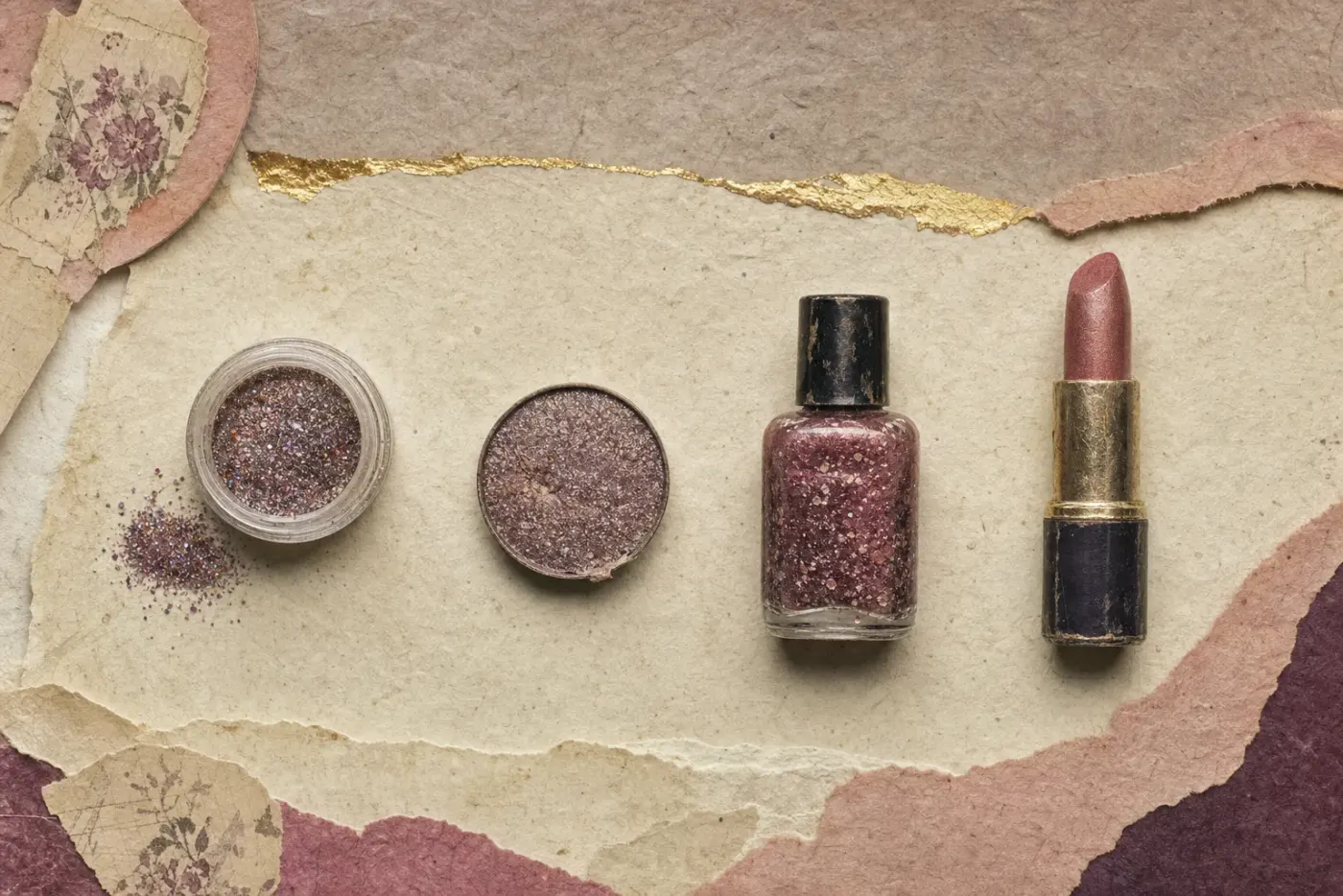
In October 2023 the European Union stopped the sale of loose plastic glitter. For makeup, lipstick and nail polish the same law allowed twelve years, and a label in the meantime.
In short
Commission Regulation (EU) 2023/2055 of 25 September 2023 restricts synthetic polymer microparticles added to products; loose glitter and microbeads went first when it entered into force, while makeup, lip and nail products have until 17 October 2035 and must be labelled from 17 October 2031 if they still contain them.
- 6min read
- 5chapters
- 2sources
On 25 September 2023 the European Commission announced that it had adopted measures to restrict microplastics intentionally added to products. The first measures would apply as soon as the restriction entered into force, twenty days later, and it gave two examples: “the ban on loose glitter and microbeads”.[1]
For most makeup the same law set a far later date, and a label to read in the meantime.
Six Years in the Making
The restriction began with a request. On 9 November 2017 the Commission asked the European Chemicals Agency to prepare a proposal under REACH, the EU’s chemicals law, and on 29 January 2019 the agency published its dossier, concluding that intentionally used microplastics released into the environment posed a risk that was not adequately controlled.[2] It estimated that more than 42,000 tonnes of them were released every year, and that a ban would cut emissions by about 500,000 tonnes over twenty years, some 70 per cent of what would otherwise be released.[2]
The Commission adopted the restriction as Regulation (EU) 2023/2055, an amendment to Annex XVII of REACH, after the member states had voted for it and the European Parliament and the Council had scrutinised it.[2][3] It placed the measure within its Zero Pollution target of cutting microplastics pollution by 30 per cent by 2030.[3]
Cosmetics were one part of a wide net. The Commission named the granular infill of artificial sports pitches as the largest source of intentional microplastics, and listed detergents, fabric softeners, glitter, fertilisers, plant protection products, toys, medicines and medical devices among the products in scope. Products used at industrial sites, or that release no microplastics in use, were exempted from the sales ban, but their makers must explain how to use and dispose of them without releasing any.[3]
What Counts
The law does not say “plastic”. It defines synthetic polymer microparticles: solid polymers in or coating particles, where at least 1 per cent of the particles by weight measure five millimetres or less in every dimension, or are fibre-like and up to fifteen millimetres long.[4] Natural polymers that have not been chemically modified are excluded, as are polymers shown to degrade or to dissolve, and polymers with no carbon atoms in their structure.[4]
Such particles may not be sold on their own, nor in mixtures at 0.01 per cent by weight or more where they are present to give the product a characteristic it is sold for.[4] The Commission’s examples of their uses in cosmetics were exfoliation — the microbeads — and “obtaining a specific texture, fragrance or colour”.[5] The regulation defines a makeup product too: anything meant to be placed on the skin, eyebrows or eyelashes “with a view to, exclusively or mainly, changing their appearance”.[4]
The Timetable
Microbeads were given no transition: the agency’s dossier had proposed none, the regulation noted, because industry was expected to have phased them out voluntarily by 2020.[6] Everything else was staggered. Rinse-off cosmetics have until 17 October 2027; fragrance encapsulation and other leave-on cosmetics until 17 October 2029; and lip products, nail products and makeup until 17 October 2035.[6]
Makeup carries a label in the meantime. From 17 October 2031 until 16 October 2035, makeup, lip and nail products that still contain the particles must bear the statement “This product contains microplastics.” Products already on the market before 17 October 2031 need not carry it until 17 December that year.[6]
The new rules will prevent the release to the environment of about half a million tonnes of microplastics.
Why Makeup Waited
The agency’s dossier had proposed six years for leave-on cosmetics, makeup among them. Its committee for socio-economic analysis weighed two alternatives for makeup, lip and nail products — instructions for use and disposal, or a longer transition — but could not conclude that either would be better than a ban after six years.[8]
The Commission chose the longer road. Reformulating makeup, lip and nail products would cost more than reformulating other leave-on products, it reasoned, and they contributed comparatively little to overall emissions; twelve years would allow suitable alternatives to be developed and limit the cost to industry. The label from 2031 was meant to encourage makers to substitute the particles before the deadline.[8]
What Is Not Known
The regulation never uses the word “glitter”. The Commission’s announcement does, as an example of microplastics sold as such; whether a pot of loose glitter sold as a cosmetic falls under that immediate ban or under the 2035 date for makeup is not settled by the two texts read here.[9][10]
The figures are estimates. The 42,000 tonnes a year and the half a million tonnes avoided were calculated before the restriction applied, and the sources here contain no measure of what it has achieved. Whether makeup houses take the particles out before 2035, or print the label instead, had not been recorded when this was written.[9][10]
Sources
- [1, 3, 5, 7, 10]Protecting environment and health: Commission adopts measures to restrict intentionally added microplastics (IP/23/4581) European Commission press corner, 2023.View source (opens in a new tab) Accessed 2026-10-03.
- [2, 4, 6, 8, 9]Commission Regulation (EU) 2023/2055 of 25 September 2023 amending Annex XVII to Regulation (EC) No 1907/2006 (REACH) as regards synthetic polymer microparticles Official Journal of the European Union, L 238, 27.9.2023, p. 67, 2023.View source (opens in a new tab) Accessed 2026-10-03.
Filed under