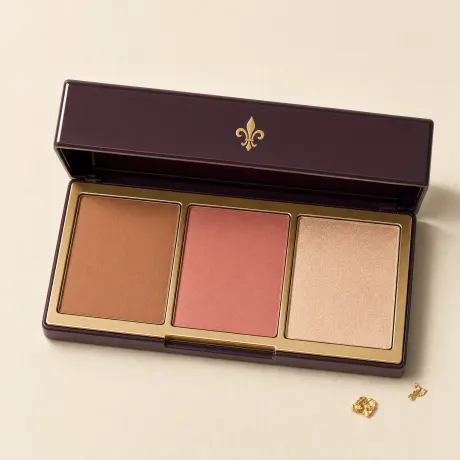
Multi-use stick
One cream colour for the cheeks, eyelids and lips. What makes a multi-use stick different from a blush stick, how to make one shade read three ways — and the makeup artist’s shortcut that became a product.
A multi-use stick is a sheer cream colour in a twist-up stick or crayon, sold to be worn on the cheeks, eyelids and lips, so that one shade gives the whole face a single wash of colour.
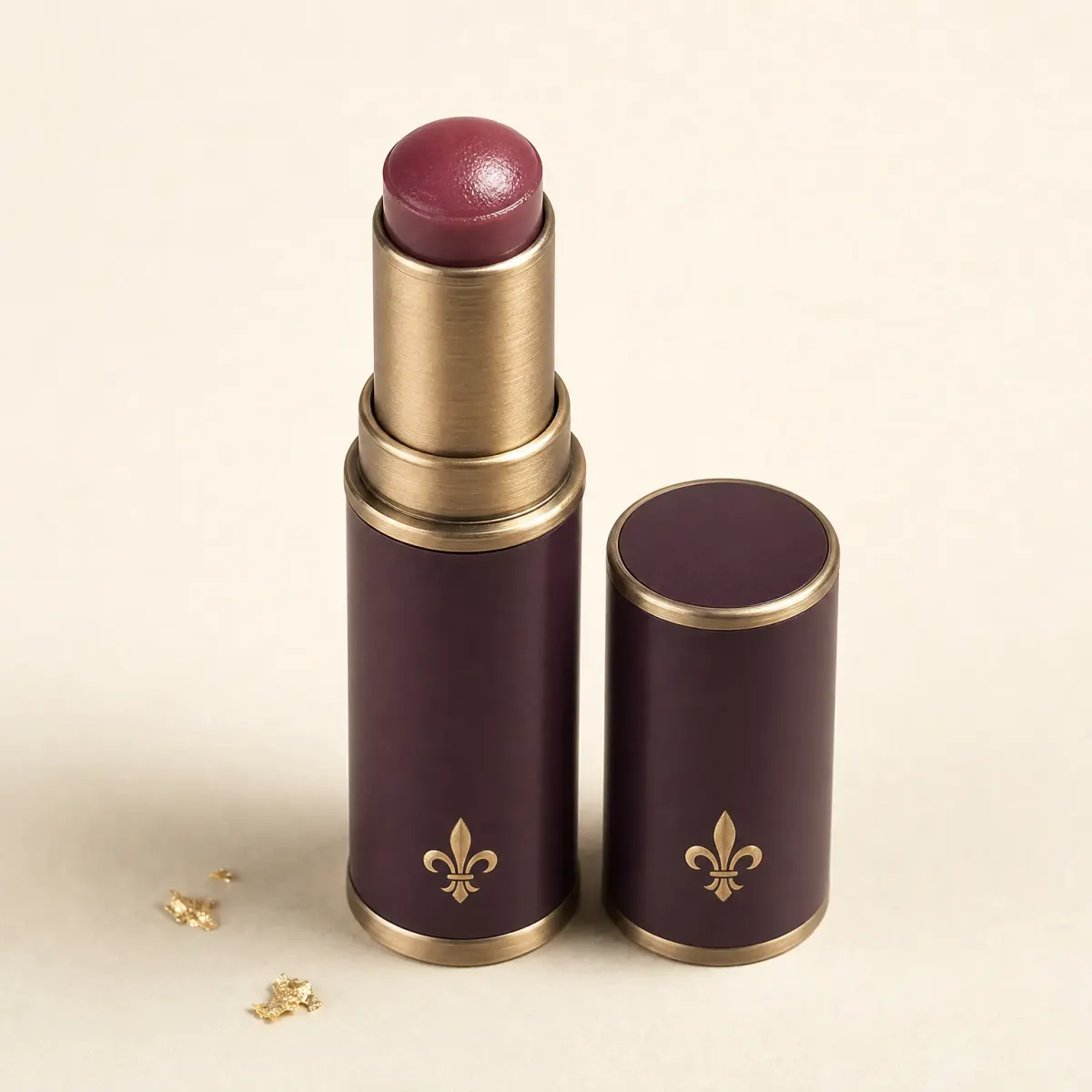
Our picks
Every multi-use stick we could confirm as sold for cheeks, eyes and lips by its maker and sold to US readers by the house or by Amazon itself: matte, dewy and shimmering finishes, sticks with brushes and one with a highlighter at the other end, from drugstore to prestige. Each opens where its maker sells it, on Amazon or at the house’s own shop, and you choose your shade there.
As an Amazon Associate I earn from qualifying purchases. Affiliate links — we may earn a commission at no extra cost to you. How this works
The original ideaPrestige NARS
The Multiple
The stick that began as one lipstick on a Harper’s Bazaar shoot, now in a new formula.
- Cheeks, lips and eyes
- Reimagined formula
Dewy with brushMid-range Nudestix
Nudies Bloom Stick
A sheer, dewy balm stick with a blending brush at the other end.
- Cheeks, eyes and lips
- Built-in brush
- Dewy
Budget shimmerDrugstore e.l.f. Cosmetics
Monochromatic Multi Stick
An inexpensive cream-to-powder stick with a hint of shimmer.
- Eyes, lips and cheeks
- Cream-to-powder
- Shimmer
Mature skinMid-range Glo Skin Beauty
Cream Blush Stick
A mineral cream stick sold as hydrating for dry and mature skin.
- Cheeks, lids and lips
- Long-wear
- Vitamin E
Radiant butterDrugstore Physicians Formula
Butter Glow & Go Multiuse Stick
A buttery stick its maker sells as blush, bronzer, eyeshadow and lip colour at once.
- Radiant finish
- Murumuru butter
Colour and glowMid-range Wander Beauty
On-the-Glow Blush and Illuminator
Cream colour at one end and a buildable illuminator at the other.
- Cheeks, lips, eyes and body
- Dual-ended
Hydrating balmDrugstore Neutrogena
Hydro Boost Hydrating Multi-Use Makeup Stick
A colour balm with hyaluronic acid, from a drugstore skincare house.
- Lips, cheeks and eyes
- Hyaluronic acid
Made for maturityMid-range BOOM! by Cindy Joseph
Boomstick Color
A long-wearing cream stick made for mature skin.
- Cheeks, eyes and lips
- For mature skin
Budget satinDrugstore wet n wild
MegaGlo Makeup Stick
A velvety cream-to-powder stick at a drugstore price, in shine and shimmer finishes.
- Eyes, cheeks and lips
- Cream-to-powder
- Vitamin E
Plastic-freeMid-range Axiology
3-in-1 Balmie Crayon
A plastic-free crayon of nine ingredients, with a matte finish and a drier texture.
- Eyes, lips and cheeks
- Plastic-free
- Matte
Hydrating tintDrugstore Mineral Fusion
3-in-1 Color Stick
A tinted cream stick its maker sells as hydrating.
- Cheeks, lips and eyes
- Hydrating
Cushion brushMid-range JOOCYEE
Glazed Cream Blush Stick
A dewy stick with a cushion brush built in, from a Chinese house.
- Cheeks, lips and eyes
- Cushion brush
- Dewy
Cream to powderMid-range Honeybee Gardens
Multi Stick
A cream-to-powder stick sold for mouth, lids and cheekbones alike.
- Lips, cheeks and eyes
- Cream-to-powder
A multi-use stick is a cream colour made to go everywhere colour goes: onto the apples of the cheeks, across the eyelids and over the lips. The formula is waxes and oils carrying pigment, usually sheer and buildable; some dry to a powdery, matte touch, others stay dewy. Packed into a twist-up stick or a crayon, it goes on straight from the stick and blends with a fingertip, which is the whole idea: one product, one colour, a face done in a few minutes.
What sets it apart from its neighbours is what its maker sells it for. A blush stick is for the cheeks, and many are sold for the lips as well; a stick sold for the eyelids too belongs here. An eyeshadow stick is for the lid alone, and a highlighter stick adds light rather than colour. The multi-use stick trades precision for speed, and gives a face that matches from brow to chin.
One shade, three ways
Start with the cheeks, where the most product goes. Dot the stick on the apples or draw a short stroke along the cheekbone, then blend upward and outward with the fingertips or a damp sponge. Take what is left on the fingertip to the eyelids, patting it across the lid and a little into the crease; a lid needs far less than a cheek, and too much will crease. Finish with the lips, dabbing colour into the centre and pressing them together, or tapping it on from the fingertip for a stain rather than a lipstick.
A few habits make it last. Blend while the cream is soft, since cream-to-powder formulas set quickly. A thin veil of translucent powder over the lids slows creasing and softens a shade that looks too strong there. On dry lips, a balm first gives the colour something to hold, and a dab of clear gloss over the top turns a matte stick into a sheer, shiny one.
Near the eyes
Whether a stick is sold for the eyes is more than a marketing detail. In the United States a colour additive may be used in the area of the eye only if its regulation specifically permits it, and the rules draw that area widely: everything within the bony rim of the eye socket, eyebrows, eyelids and lashes included.[1] A number of colours approved for cosmetics in general are not approved there, and the US Food and Drug Administration (FDA) advises against using any cosmetic near the eyes unless it is intended for that use; its example is a lip liner used as an eyeliner, which risks carrying contamination from the mouth as well as unapproved colours.[2] That is why this guide counts a stick as multi-use only when its maker sells it for the lids.
In the order above the lips come last, so nothing that has touched the mouth goes near the eyes that day. On later days, if the stick has gone straight onto the lips, take colour for the lids with a clean fingertip or brush rather than drawing the stick across them. The FDA also advises washing the hands first, never sharing eye makeup and throwing away any in use when an eye infection began.[2]
Choosing one
Choose the shade for the lips and cheeks together, not for the eyes; a shade that works on both will usually work as a wash on the lids. Muted roses, warm terracottas and soft berries suit most people, while very bright pinks can look like costume on an eyelid. Deeper skin needs deeper, more saturated shades to show on the cheeks at all, and some ranges are thin at that end, so check the shade list before buying.
Then the finish. Cream-to-powder sticks dry to a soft, matte-looking surface and hold longer on oily skin; dewy and glossy ones stay moist, suit dry or mature skin and move more as the day goes on. Some carry shimmer, which lifts a lid but shows texture on a cheek. Built-in brushes and dual-ended designs, colour at one end and highlighter at the other, save carrying a separate tool.
Where it came from
Using one colour on more than one feature is an old habit. Early rouges were put on the lips as well as the cheeks, and some women used their lipstick as rouge. In 1915 Richard Hudnut’s advice on rouge noted that a good liquid rouge “may be used to color the lips, although our specially prepared Lip Rouge in sticks is more convenient”. As stick rouge and lipstick spread, matching the two became fashionable, and Revlon introduced its Cheek Stick in 1940, its colours harmonised with the company’s lipsticks and nail enamel.[3]
The Multiple, from NARS, comes with an origin story told by the makeup artist himself. In 1996 Harper’s Bazaar asked six makeup artists, among them François Nars, Bobbi Brown, Laura Mercier and Kevyn Aucoin, to create a spring look for its March issue. Nars painted the model Carolyn Murphy’s eyes, cheeks and lips with a single burnt-orange lipstick called Tangier, and the idea for The Multiple followed: in his words, “one product that mimics exactly what this lipstick does when applied to the eyes, cheeks, and lips”. He remembers four or five shades at first, some almost ivory, made “before the category of luminizers”.[4]
Nars meant it to be put on with the fingers, and quickly: the look on that shoot, he says, took ten minutes. NARS relaunched The Multiple in 2025, reworked and in twelve shades.[4] By then sticks sold for cheeks, eyes and lips were made at every price, from the drugstore to plastic-free crayons.
The techniques
- Pat
- Tap lightly with a fingertip or damp sponge so product melts in rather than moves.
- Dot and blend
- Place small dots of product, then blend them outward.
Sources
- [1]Color Additives and Cosmetics: Fact Sheet U.S. Food and Drug Administration, 2022.View source (opens in a new tab) Accessed 2026-09-26.
- [2]Eye Cosmetic Safety US Food and Drug Administration.View source (opens in a new tab) Accessed 2026-09-22.
- [3]Rouge Cosmetics and Skin, 2010.View source (opens in a new tab) Accessed 2026-09-25.
- [4]François Nars on the Multiple (interview) Harper’s Bazaar, 18 July 2025, 2025.View source (opens in a new tab) Accessed 2026-09-26.